
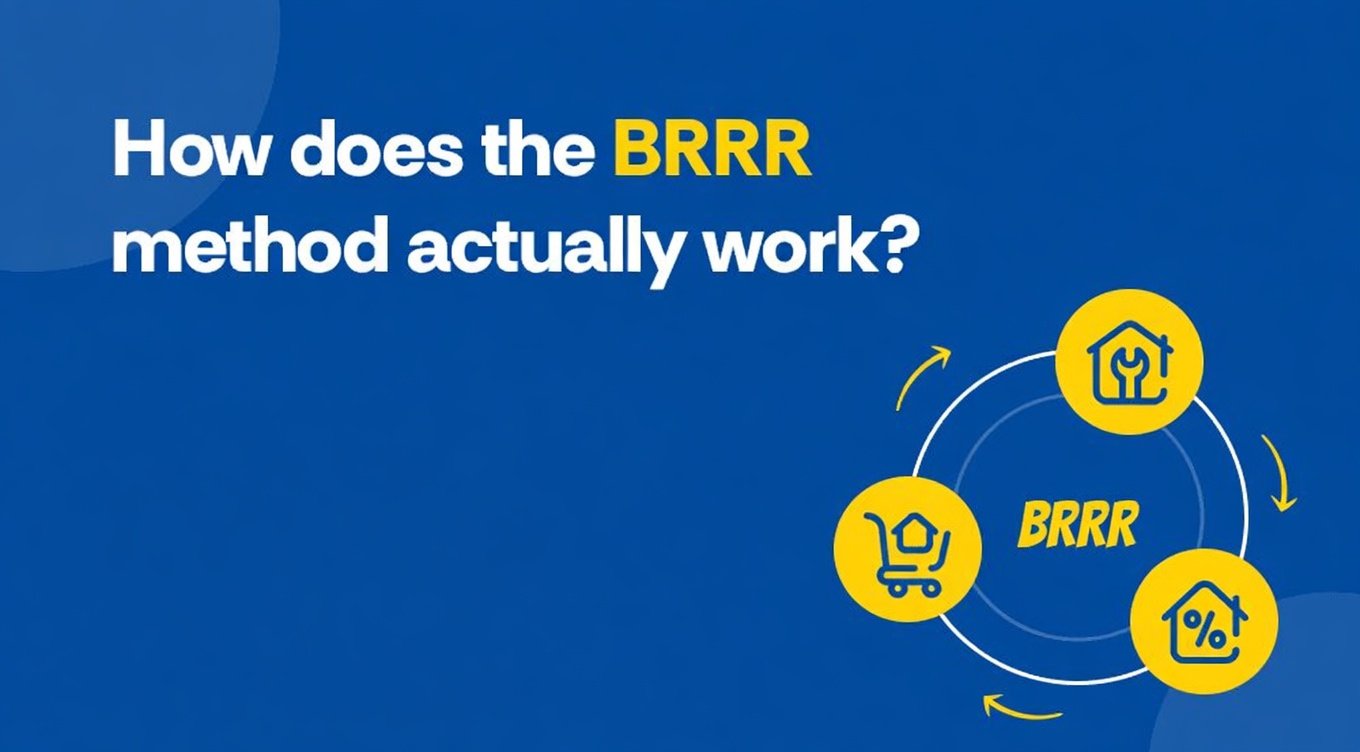
A while back, I was scrolling through Instagram and one video by a Kenyan “investment” coach took me by shock. He was explaining on how to invest in Real estate and mentioned a strategy I had heard before on the internet. It is the BRRRR strategy, which is an acronym for Buy-Rehab-Rent-Refinance-Repeat. If you are a real estate student like me, then you probably have encountered this mouthful of a strategy on YouTube or investment books. I was shocked to hear him advise innocent Kenyans to apply this strategy as a way of growing their real estate portfolios. The rude shock is that the B-R-R-R-R strategy doesn’t really work well in Kenya and in this blog, I will be giving you my two-cents on it.
What is the B-R-R-R Strategy?
So, what is this holy-grail of a strategy that has made most Americans millionaires and why am I against it here in Kenya. Let’s first define how it works so that we are all on the same page. The B-R-R-R strategy is a way of investing that involves 4-steps.
1. Buy
The first step is purchasing a property that appears cheap and run-down. You are simply looking for any undervalued property that you could improve. In most cases, it works when you take a mortgage and commit about 20% of your own money as down payment.
2. Rehab
In this step, you renovate the property you bought with the aim of increasing its value. This might include; painting, upgrading the finishes, repairing the roof or even adding another structure to it.
3. Rent
After you are finished doing the renovations, the next step is to find a tenant for the property. The goal is to start generating monthly income as soon as possible so that you can cover the monthly mortgage contributions as you await equity build up.
4. Refinance
This is the magic step. You see once you fixed the property, the improvements increased the value of your property. So when your refinance it at the new value, you are pulling out much of the money you spent on fixes and the purchase. At the end, you recover your initial investment plus hold complete ownership of the property.
Scenario of B-R-R-R Strategy

An ideal scenario in the U.S typically look like this;
- You find an old house selling for $100,000
- The bank finances 80% ($80,000) while investor pays 20% down ($20,000)
- You then spend $30,000 renovating the property
- After renovations, the property value increases to $180,000
- Duplex is rented out for $2,100/month
- Monthly expenses total about $1,200/month
- You earn about $900/month positive cash flow
- After some time, you decide to refinances the property at 75% of the new value
- The bank issues you with a new loan of $135,000
- You pay off the original loan and recovers most of the cash you invested
- At the end you now own the property while it continues generating income.
Why it doesn't work in Kenya
This strategy looks too good to resist, but before you decide to go and get a loan, there are a few things that make its execution next to impossible in Kenya. Let us discuss them.
1. High Interest Environment
Unlike the U.S where mortgage interest rates sit at 6% and below, the situation in Kenya is quite different. In a country where a loan could cost you up to 18% in interest, the cost of credit becomes the first eliminating factor of the strategy. The average yield in Kenya sits at 5% – 10%, if your loan costs you say 18%, you are left in a position called negative leverage. At this point, the loan you took is losing you money instead of making it for you.
2. Oversupply in the Urban rental market
The next weakness lies in our rental market. At such high interest rates, your monthly mortgage payments will be huge. The rent that you would need to cover the loan plus other expenses would be quite high and in most cases way above the market rate. Follow the example below;
- You decide to buy a 2-bedroom house in Lang’ata at KES 10,000,000
- The down payment is (20%) = KES 2,000,000
- The bank lends you KES 8,000,000 At a rate of 15% for a period of 20 years.
- Your monthly payments would be around KES 105,000
So the rent you charge should be above KES 105,000 per month and add some extra cash as profit. However, the issue is that no one would pay you KES 105,000 for a 2-bedroom in Langata. The rent of a 2-bedroom in the area is about KES 60,000 at the high end. This means that in order for you to pay your monthly loan, you’ll need to go back to your pocket and top up about KES 40,000 more.
This is assuming that your unit finds tenants throughout. So in periods of vacancy, you will be paying the full KES 105,000 out of pocket. You now see why this method would not work here?
3. Weak Refinancing Market
The holy grail of this strategy lies in refinancing the renovated property at a higher valuation. However, in Kenya, we have a next to non-existent refinancing mortgage market. In the first place, securing a mortgage is normally met with lots of red-tape and scrutiny from banks which are quite conservative. Should you decide to refinance the property, most banks would make it next to impossible to get the loan.
In addition to this, the Kenyan real estate scene is not that popular with valuations which leads to a lot of inconsistencies. Your property could even get undervalued which breaks the Refinancing mechanism of the strategy.
4. Broken systems slow momentum
For the B-R-R-R-R method to work, the transaction needs to move quickly so that you can roll-over the profits to the next project. However, the Kenyan land and titling system often moves slowly with loan approvals taking months to mature. In real estate, a wasted month could be the difference between profit and loss. One-month delay could mean that the cost of construction skyrockets like crazy, imagine what a 6-months delay could do. Other hidden costs from an inefficient system include;
- More loan interests
- More holding costs
- Mores service charge
- Volatility of construction costs
In Kenya, we are a consumptive nation, meaning that we import a lot of the consumables that we use. Construction is no different. Because one of the R stands for renovation, your strategy hinges on construction prices remaining relatively stable during the fix-up period. If say costs surge by 20% due to increased taxes or a war in the other part of the globe, then you might begin counting your losses as early as possible.
I am not refuting the scalability and prowess of the B-R-R-R-R strategy it has made many millionaires. However, here in Kenya, the predictability is broken by systemic issues that introduce too many moving parts.