
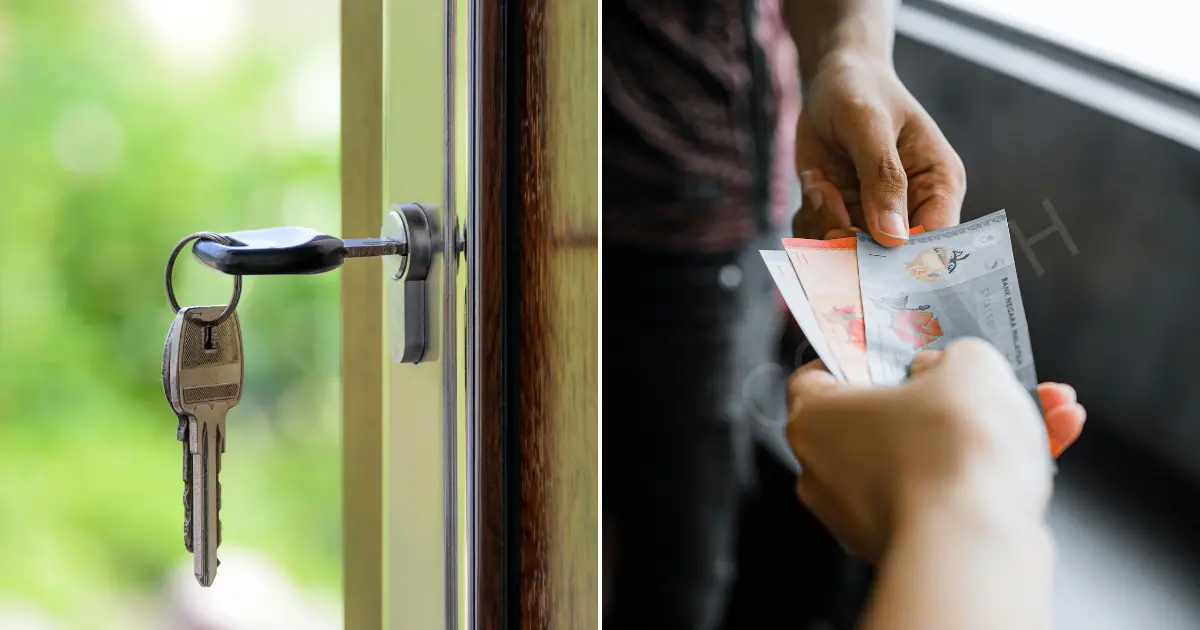
One of the most contested issue when it comes to moving from a rented house is getting your rent deposit back. The landlord or agent will give you countless excuses just so that they can find a reason to withhold the security deposit. While not every tenant might qualify to get their deposit returned, I strongly believe in a fair system where justice prevails. The truth of the matter is that if you can return the property in the same state that you found it in, then you should get your security deposit refunded. Many tenants are left discouraged from pursuing their deposits and end up leaving it with the landlords or some take very drastic measures by destroying the property. I am here to tell you that it is possible for you to get your deposit back and I will be showing you how in this blog.
What is a security deposit?
Security deposit refers to the refundable sum of money you pay as a tenant to the landlord when moving into a rental unit. The aim of the deposit is to act as a form of ‘insurance’ that will cover the property in case of damage beyond normal wear and tear. It also covers unpaid rent or utility bills like water that are postpaid and cleaning charges. In Nairobi, the security deposit is equal to 1 month worth rent, however, in more high-end areas, it can be about 2 month rent equivalent.
For example: If the rent for your unit is about KES 12,000 per month, then your security deposit will be about KES 12,000.
When should security deposits be returned?
Unfortunately, in Kenya, there is no singly dedicated law that talks about residential security deposits. However, your right to get a refund is totally dependent on general contract law which in this case is the tenancy agreement you signed between you and your landlord. So getting a refund totally depends on your ability as a tenant to withhold your end of the agreement. Below are several scenarios where you should get your deposit back;
1. You have maintained the property well
Most tenancy agreements are very clear on maintaining the property in a good condition. Except for the normal wear and tear that occurs in a lived unit, if you are able to take good care of the unit, your landlord is obligated to refund your deposit when you choose to move out provided the rest of the conditions below are kept.
2. You have no rent arrears
Another condition that you must keep is that you need to have fully paid all your previous rent. In short, your outstanding rent balance needs to be zero.
3. you have left the property clean
Being a property manager, I have certainly met my fair share of ‘crazy’ tenants. Some people will leave a unit in a really terrible state, stains on the floor, peeled of paint and pungent smells everywhere. Restoring the unit to a clean and usable state needs professional deep cleaning which costs money.
4. You have no outstanding utility bill
Sometimes tenants leave outstanding utility bills before they move out. I have even come across a case where a tenant had messed with the prepaid token meter. Such acts will definitely lead to the landlord slicing a part of your deposit and in the event that the damage caused is too much, then they are allowed to withhold the full amount.
What to do if your deposit is not returned
When you have upheld your end of the tenancy agreement, then contractual law states that the landlord should uphold their end as well by refunding you the deposit. But if you are reading this, then I am guessing they haven’t kept their end of the bargain. Below are some legal ways that you could use to recover withheld deposits.
1. Document everything
Before you decide to take the matter to a court or a mediator, you must gather your evidence. This typically involves;
- Getting the signed tenancy agreement
- Receipts for all rent payments and the initial deposit/M-pesa statements could work
- Move-in and Move-out photos showing the state of the property to prove it was left undamaged
2. Seek ADR methods first
As a property manager, one clause that we always include in our tenancy agreement is that all disputes must first be taken to a third-party before turning to the courts. This is what legal experts call Alternative Dispute Resolution or (ADR) and I advise clients to seek it before going to court as it takes less time and costs less. As a tenant, the best third-party for such mediations is your local Assistant County Commissioner or the Areas Chief.
3. Send a formal demand letter
For you to be taken seriously, I recommend drafting a formal demand letter addressed to the landlord asking for the refund. These days, platforms like chatGPT and SheriaAI have made it super easy for you to have a professional demand letter. In the letter, outline the facts and quote the tenancy agreement clauses that show you are correct. It is also important that you included clear timelines such as (7 – 14 days) to make the refund time bound.
4. File a legal claim
If the demand letter goes un-responded to and ADR methods don’t yield any result, then I would suggest filing a claim at the Rent Restriction Tribunal. This tribunal is usually the most appropriate way to solve rental disputes in Kenya. I recommend going through it as opposed to the courts as it is cheaper and straightforward.
Another legal avenue you could employ is the small claims court. It is also quite effective in my view as it is required to solve cases within 60 days of filing and you don’t need any lawyer to file the claim. The fact that they handle disputes of up to KES 1,000,000 makes it suitable for rent deposit claims as they typically fall below this range.
5. Never result to destroying the property

In my line of work, I have seen many angry tenants take the wrong course of action that has left them in more trouble. Whether it is flashing down concrete in the toilet or breaking windows, poorly directed anger can lead to more harm than good. Any act to destroy the property is treated as a criminal offense know as Malicious damage to property and if the landlord takes you to court, then you are looking at prison sentences of about 5-years.