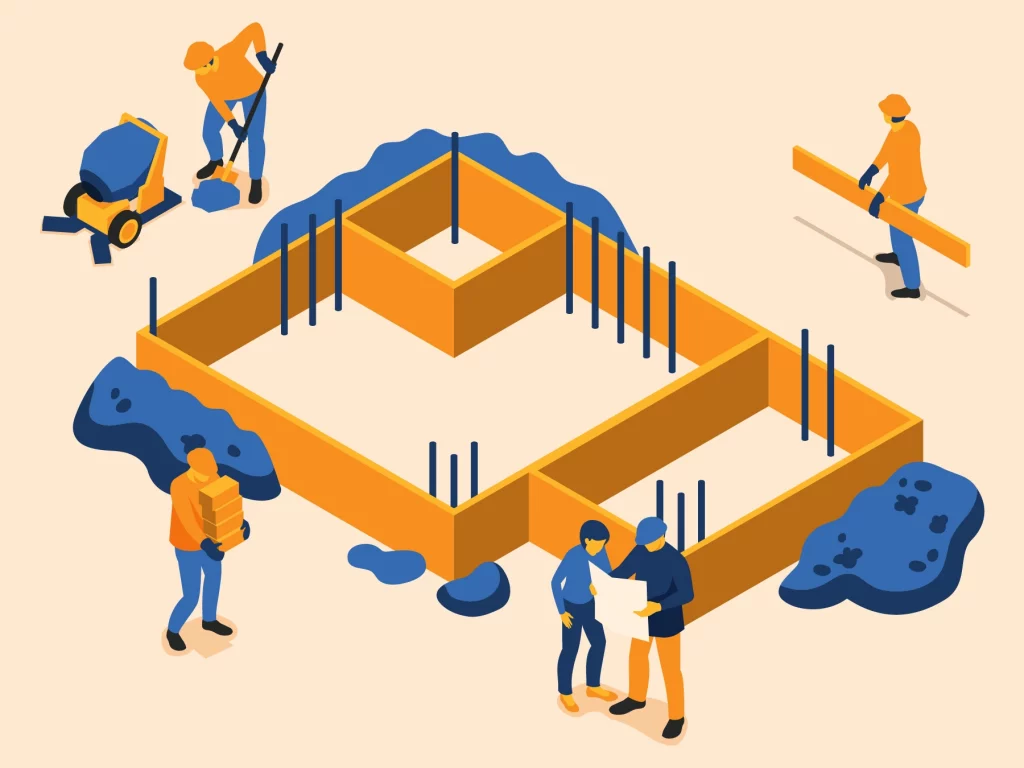
When it comes to construction, one of the most important part in your building is the foundation. No matter how beautiful the house is, if you have a weak foundation, then it is of no use. I often tell my clients that you can cut corners in every other place but NEVER joke with the foundation of your building. During my time in construction and by extension real estate, I have seen how unforgiving a bad foundation can be.
Imagine building a multi-storeyed building worth 10 million but a poor foundation causes it to collapse and now you are left without your money plus without any investment, just because you compromised on the most important bit – the foundation. With that said, I am aware that many of you are not that well-versed with construction. That is why I have decided to do this guide on the types of foundation, how to choose them and the cost implications so that you are well informed before deciding to embark on construction.
What factors affect the type of foundation
Before we check out the types of foundations available, I would like to show you some of the factors that determine the foundation that you will use. Knowing this will help you in many ways including; selection of the land and the budget you should consider setting aside.
1. Soil type
The type of soil you are building on is perhaps one of the most consequential factor in determining the type of drainage to be used. Your soil will affect the drainage and bearing capacity which is the ability of the soil to carry heavy loads. Some soils like black cotton soil are known to make construction quite expensive because they expand when they absorb water and shrink when dry meaning if you place your foundation on it, it’s going to be unstable. On the other hand, murram soil has the best bearing capacity and will make the cost of doing your foundation quite affordable compare to other soils.
2. Type of Building
The type of building you decide to put up will also affect the foundation you decide to choose. Structures vary in their size, height and load which affects the foundation they are to be built on. If you decide to build a 2-bedroom bungalow for example, they type of foundation will be different from a person who decides to do a 5-storeyed apartment block. The ‘heavier’ or ‘taller’ your building, the more complex and expensive your foundation will be.
3. Topography of the land
Another factor is the topography or what we can describe as how sloppy or flat the land you want to build on is. When the land is flat, it makes it easy and cheap to build on because excavation is straightforward and the distribution of the weight of your building is even. However, when you are dealing with sloppy or uneven terrain, the foundation design becomes more complex and costly because you need a lot of excavation, back-filling and stabilization.
4. Geological conditions
Some parts of Kenya were once quarries and when the miners were done with them, they decided to backfill them. Overtime people have decided to buy these pieces of land and divide them into small plots before selling them. However, many buyers end up buying the land and if restoration was not done properly, you may need to spend a lot more on the foundation to get to stable rock that you can build on.
5. Construction Cost & budget
Lastly, your budget will really affect the type of foundation you decide to choose. Deep foundations are costly compared to shallow foundations meaning if you don’t have a lot of money to spend, you are likely to go with the cheaper option. However, I should repeat that you should NEVER attempt to cut corners on the foundation as this might lead to a collapse where you lose your investment or worse, lead to loss of life.
Types of foundations
1. Strip Foundation
A strip foundation is the most common type of foundation used for houses such as bungalows, maisonettes, and small commercial buildings in Kenya. It consists of continuous strips of reinforced concrete placed beneath load-bearing walls. It works best on firm, stable soils like murram and red-soil where the ground can safely support the building without excessive movement.
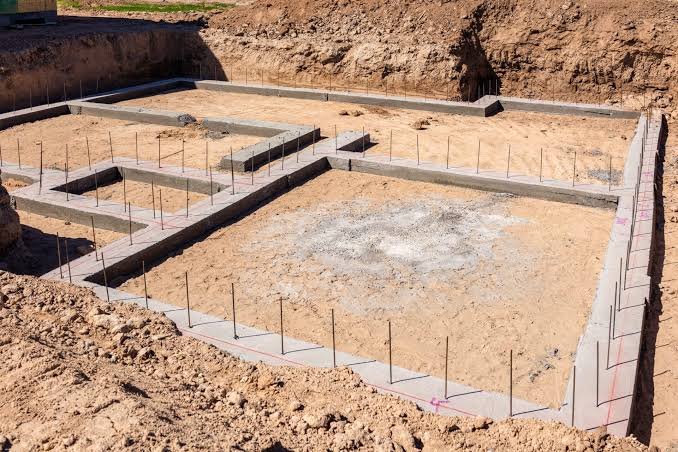
This is one of the least expensive foundation types because it requires relatively little excavation, concrete, and reinforcement compared to other foundations. However, costs can increase if the soil is weak and needs improvement before construction.
| Pros | Cons |
| Affordable and economical | Not suitable for weak or expansive soils |
| Simple and quick to construct | Can crack if the soil settles unevenly |
| Uses less concrete and steel than other foundation types | Limited to relatively light buildings |
| Easy to inspect and maintain | Requires reasonably level ground |
2. Suspended foundation
A suspended foundation is an alternative to a traditional strip foundation when the ground near the surface is weak or unstable, especially on black cotton soils, which are common in many parts of Kenya. Instead of placing the floor slab directly on the ground, the floor is suspended above it and supported by reinforced concrete beams. This allows the building’s weight to be transferred to stronger ground while preventing movement of the expanding and shrinking soil from affecting the structure. In Kenya, suspended foundations are commonly constructed using:
- Beam and Block System
Reinforced concrete beams are installed first, and precast concrete blocks are placed between the beams to create the floor. A thin concrete topping is then poured over the blocks to form a solid floor.
- EPS (Expanded Polystyrene) Panels
Lightweight EPS panels are placed between reinforced concrete beams and covered with reinforced concrete. This creates a strong yet lightweight suspended floor that is quick to install and provides good thermal insulation.
ProsConsExcellent solution for black cotton and other unstable soilsHigher initial construction cost than strip foundationsReduces the risk of cracks caused by soil movementRequires more engineering design and skilled laborProvides a stable floor that is not affected by ground expansion or shrinkageConstruction takes longer than a simple strip foundationCan reduce the amount of soil replacement neededUses more concrete, reinforcement, and prefabricated materialsBeam and block or EPS systems can speed up floor constructionNot usually necessary on firm, stable soils where a strip foundation is sufficient
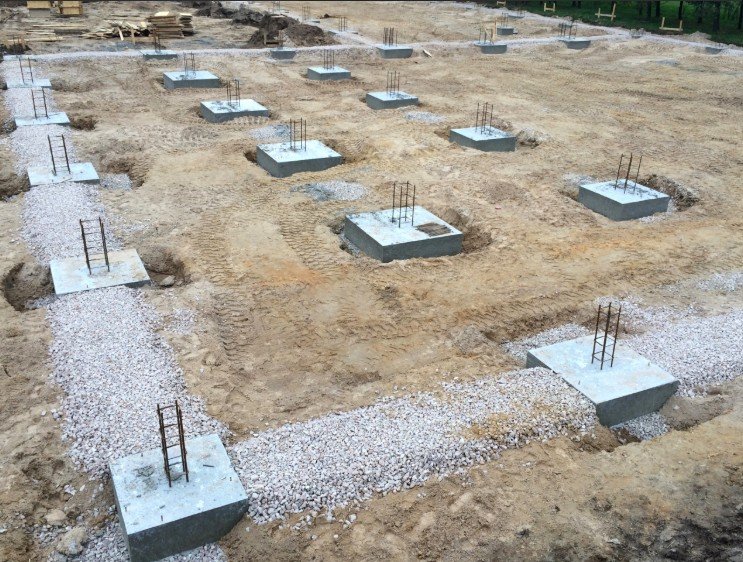
3. Pad (isolated) Foundation
Before choosing this type of foundation, a soil investigation or trial pit is recommended to determine how deep the stable ground is. Pad foundations are moderately priced. Although they use less concrete than raft foundations, they require structural calculations by an engineer, and excavation depths may vary depending on the soil conditions.
| Pros | Cons |
| Suitable for column-supported buildings | Requires accurate structural design |
| Uses materials efficiently | Not ideal for weak or highly expansive soils |
| Can support heavier loads than strip foundations | Excavation depth may increase construction costs |
| Easier to expand buildings in some cases | Poor soil conditions may require a different foundation type |
4. Raft/Mat foundation
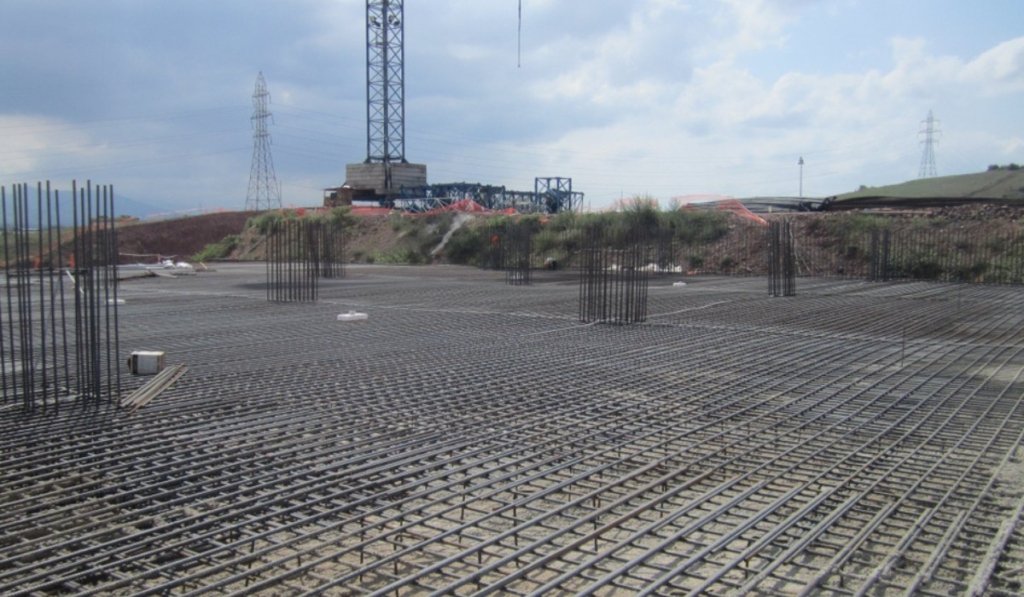
A raft foundation is a large reinforced concrete slab that covers the entire footprint of the building. Instead of supporting individual walls or columns, it supports the whole structure at once by spreading the load over a large area. It is commonly used on weak or expansive soils, especially black cotton soils found in parts of Kenya such as Ruai, Kitengela, Syokimau, and Athi River.
Raft foundations are expensive because they require large amounts of concrete, steel reinforcement, and formwork. Despite the higher initial cost, they can save money in the long term by reducing the risk of foundation movement and structural damage.
| Pros | Cons |
| Excellent for weak and black cotton soils | High construction cost |
| Reduces uneven settlement | Uses large amounts of concrete and steel |
| Supports heavy buildings effectively | Requires skilled workmanship |
| Can reduce the need for deep excavation | Repairs can be difficult if problems occur |
5. Pile foundation
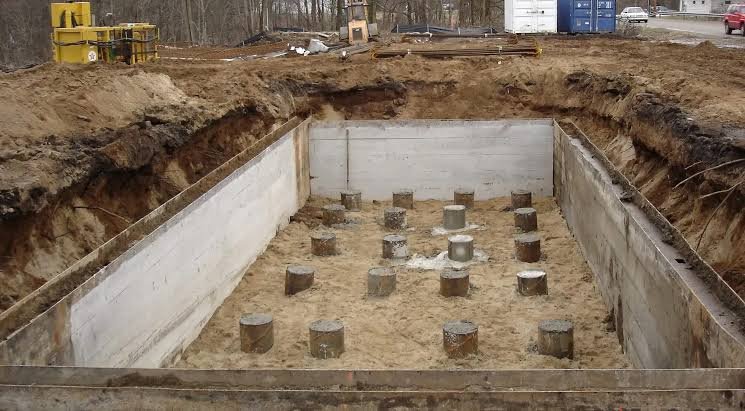
A pile foundation is a deep foundation used when the soil near the surface is too weak to support a building. Long concrete, steel, or timber piles are driven or drilled deep into the ground until they reach stronger soil or rock. The building’s weight is then transferred to these deeper, stronger layers. This type of foundation is commonly used for high-rise buildings, bridges, and large commercial developments. It is the same principle used for very tall buildings such as the Burj Khalifa.
Pile foundations are the most expensive foundation type because they require specialized equipment, skilled contractors, and detailed engineering. However, they are often the only safe solution where surface soils cannot support the building or when your building is too big to be supported by other types of foundations.
| Pros | Cons |
| Suitable for very weak soils | Very expensive |
| Can support very heavy buildings | Requires specialized equipment |
| Reaches strong soil or rock deep underground | Construction takes longer |
| Reduces settlement problems | Not economical for small residential buildings |
6. Stepped foundation
A stepped foundation is a variation of the strip foundation used on sloping ground. Instead of constructing one continuous level foundation, the foundation is built in a series of steps that follow the natural slope of the land. This allows the building to remain level while reducing unnecessary excavation. It is commonly used in hilly areas such as parts of Murang’a, Ngong, and other regions with uneven terrain.
Stepped foundations are moderately expensive. They cost more than standard strip foundations because of the additional excavation, setting out, and labor required. However, they are usually less expensive than constructing retaining walls or carrying out major earthworks to level the land.
| Pros | Cons |
| Ideal for sloping sites | More expensive than a standard strip foundation |
| Reduces excessive excavation | Construction is more complex |
| Helps keep the building level | Requires careful setting out |
| More economical than major earthworks on moderate slopes | Not suitable for very steep slopes without additional support |