We are all familiar with the common saying in investing that states “Buy low, sell high.” Well foreclosure properties offer you as an investor this rare opportunity. Foreclosure simply means the process of a lender repossessing and selling a piece of property when the borrower is unable to payback a loan. In Kenya, this niche has been a preserve for few investors owing to the legal complexity and social capital needed to get to such properties.
What is even more compelling is the fact that the supply for foreclosed properties is always growing especially with a down-turning economy. And while it is not my joy to see people lose their assets to auctioneers, banks and receivers, having people give these properties a second chance negates down sides. In this blog, I will be doing a deep dive on the types of foreclosure properties, where to get them, what you need to look for and a caveat for buyers.
Types of Foreclosure Properties
1. Estate Distressed
This occurs when property left by a deceased person needs to sold quickly to settle the debts they left behind. Other times, succession disputes spiral out of control and the heirs want to sell the property as soon as possible. In all this instances, our sellers are in a position we call ‘motivated’ and will always give huge discounts to any buyer who can give them the money in the shortest time available.
2. Bank Distressed
Banks are the largest movers of foreclosed properties in Kenya. When a borrower fails to meet the repayment schedule agreed upon by the banking institutions, the bank will often cease the property and obtain a power of sale. The aim of the bank is to recoup whatever is owed and the law clearly states that any money made on top of what was owed should be repatriated to the previous owner. Therefore, banks don’t have any incentive to make more money than they are owed and as a result will sell at hugely discounted prices.
3. Divorced Distressed
In the case of matrimonial property, once the court proves that the real estate in question was a contribution of both the husband and wife, most divorcees result to selling the property. This is especially true if the house was their primary residence and they can’t agree who is to have it. Many of such sales are done emotionally and as a result, the couple ends up selling at a significant discount.
4. Developer Distressed
In today’s real estate industry, the competition can be fierce and seeing that we are already in an oversupplied market, some developers end up making significant losses. Since most of them are stuck with unsold units and money owed to banks or their equity partners, they are often forced to sell the stock at discounted prices. Others want to free up their balance sheets so that they could be more appealing to lending institution or jumpstart their next project.
5. Business Distressed
As of the time of writing this article, the business environment in Kenya has not been the best for many. This has either led to the downsizing or collapse of some businesses. These business entities might either be owning properties or owing money to suppliers & employees. The management or court will appoint a person called a receiver to sell their assets at a “haircut” value to recover owed monies.
6. Relocation Distressed
This mostly happens when foreigners who have been living in Kenya decide they want to go back to their countries. The hurry to leave and pressure of leaving nothing behind makes them liquidate their properties at huge discounts.
Where To Get Foreclosure properties in Kenya
Now that you know the classifications of foreclosed properties, the next step is knowing where to find them. This is where the value is because many people don’t know about these properties in the first place.
1. Auctioneer Websites
You will often find a catalogue of foreclosed properties on the websites of most auctioneers or on their social platforms. Just make sure you are dealing with the party selling the property and not brokers as they tend to hike prices.
2. Property Groups
Property groups and communities like those on WhatsApp will sometimes post foreclosed properties. This gives you a good opportunity as an investor to reach out and set up viewing. Even if you don’t get the property, at least you will have made some worthwhile networks for the next deal.
3. On Newspapers
It is said that if you want to hide something from a person, place it in a book. And this is very much correct, most Kenyans rarely bother going through newspapers and that is where the hot deals are. These days there is nearly a whole section dedicated to showcase foreclosed properties and all you have to do is call the auctioneers.
4. Bank Websites
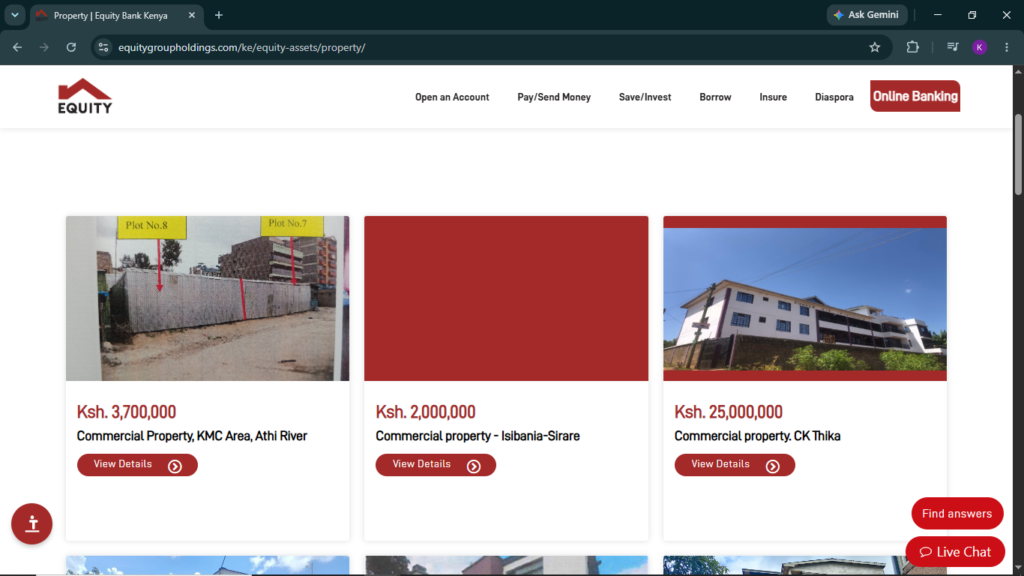
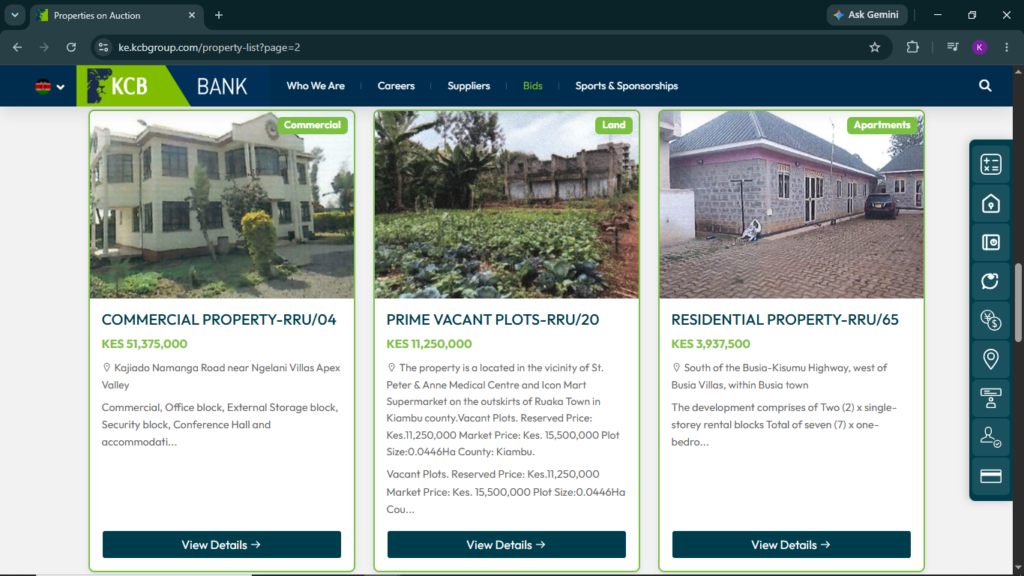
Banks have the largest stock of foreclosed properties in Kenya and will often list them on their websites. They even sort them based on the type of property and its location. I will leave a link to several banks property webpages for you to browse. Some banks also offer property tours every quarter which you can decide to book for as little as KES 500 bob.
When businesses, companies or big institutions become insolvent, they are often placed in the hands of insolvency practitioners. The work of the insolvency practitioner is to dispose of the entities assets and recover any money owed to banks, investors or employees. Since they need to dispose the property quickly, they often take ‘haircuts’ – which is basically a cut from the properties original value to facilitate a fast sale.
6. Property Management Companies
Property management companies often have the first news when a piece of property they are managing is being sold. Since they work closely with the seller, they will often get you a good deal if you are serious about buying. Moreover, you can nurture this relationship and source more deals through them in futures.
7. Relationships
The money in real estate is always in the networks and relationships that you build. If you are an investor wanting to make money from foreclosed properties, you need to build relationships with auctioneers, bankers, micro-lenders, estate lawyers and property agents.
What to look out for in auctioned properties
1. A clean title
When you are buying foreclosed property, always ensure that the title to the property is clean and free from encumbrances. This includes charges on a loan to the property and such claims that might affect you after you buy. I often advice buyers to run the property through a search before committing to buy.
2. Valid Reasons
In business, we often say that people are conned at their point of greed and foreclosed properties exemplify this. When you are made aware of a property going for 50% below its market value, you will often ignore all due diligence needed and just push towards the sale. However, that is where you might stand to lose your money to conmen.
3. Property Condition
Always check the physical condition of the property before you buy. Some properties I have come across especially residential ones might look as though you are getting a great deal when you buy but you later realize that they amount needed to fix them will eat into your budget.
4. Consesus with Partner
If the property on sale is matrimonial property, you need to make sure that both partners are in consensus on the sale. Lest you might buy the property and end up in court with either the wife or husband.
5. Bid Price
The bid price is often the starting price of the property and tends to go up when the auction starts. Many people are often lured in by the low bid price and they end up not buying anything as bids go way above their budget. So before you apply for an auction, always make sure that you have enough wiggle room in case the price goes above your budget.
6. Non-Refundable Deposits
Most deposits on such properties are often non-refundable and you need to factor this in mind before applying. Most new investors lose their money on deposits because they don’t understand the legalities behind auctions.
7. Your intended use of the property
Knowing what you want to do with the property is very important as it informs how much you should be willing to spend. If you goal is to buy the property, remodel it and sell it, make sure you do your math and know how much the whole exercise with cost you as well as the expected profit. Some investors overpay for the renovations and end up with a property that is way above the market value in that area. This will either lead to your property staying vacant or you selling at a loss.