
What is a land sale agreement?
A land sale agreement is a contract between a seller and an interested buyer that outlines the terms and conditions of sale. Land buying is a process, and anything can happen along the way. To ensure that the rights of both buyer and seller are protected, a sale agreement is important. It protects the seller by making sure they are not wasting their time, as only serious buyers opt in. It also protects the buyer’s money by stipulating how payments will be structured and what happens if the seller defaults.
The Kenyan land scene has seen its fair share of scandals, from land fraud to double sales and title disputes. Therefore, having a well-drafted Land Sale Agreement gives you as the buyer confidence that your money is protected in the event the seller pulls out of the deal. Whether you are dealing with a company or an individual as the seller, make sure you are operating with a land sale agreement. It is like the referee in a match, and it evens the playing field for you.
A word of caution is to be extremely careful, especially when signing agreements from land-selling companies. Some of them structure clauses within the agreement that leave you exposed, and you end up losing your money. Always have a professional go through the document and check it out for your interests.
Where it comes in
I have covered the land buying process in another blog. But the purpose of this conversation is that I will do a recap of the same. So typically, land buying follows the process below:
1. Buyer shows interest and negotiates price and terms.
2. Preliminary due diligence is done (land search, ownership, boundaries, encumbrances, zoning).
3. Optional booking/reservation fee may be paid.
4. Formal Land Sale Agreement is drafted and signed.
5. Buyer pays deposit (10–30%).
6. Buyer completes due diligence and pays remaining balance.
7. Transfer process begins (consent, valuation, stamp duty, title transfer).
8. Buyer receives possession after full payment and transfer.
The land sale agreement is legally binding, and signing it before you read it can have serious implications. I have seen agreements state that in the event the buyer stops paying their installments, the seller can sell the piece of land without needing to refund the buyer. In other cases, a small delay on the buyer’s side would automatically lead to them losing their deposit.
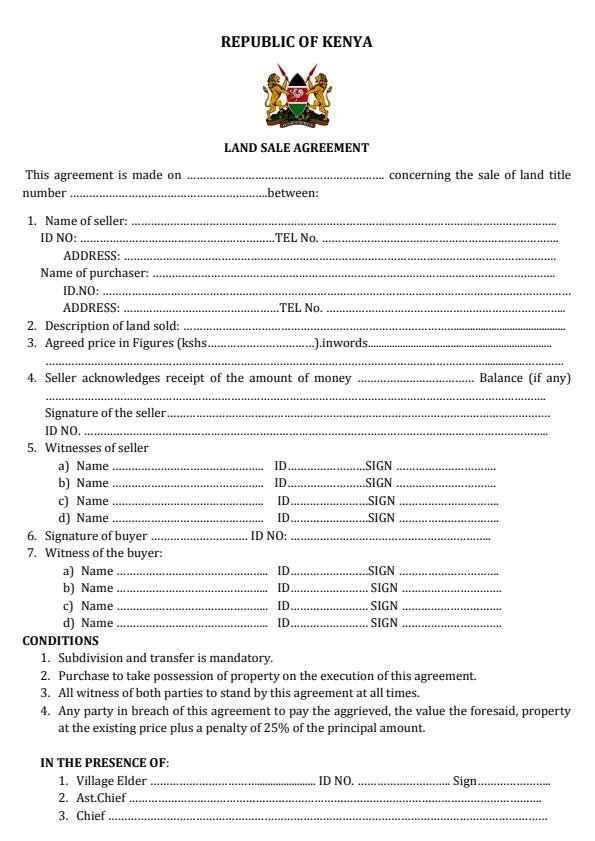
Land sale agreement form pdf
Below is an example of a landsale agreement. A caveat is that this is only a guiding document, you can borrow from it but make sure you get legal advise before any purchase.
Clauses in a land sale agreement
1. Parties to the Agreement
This section identifies the seller and the buyer using their full names, ID numbers, addresses, and contact details. It is important because it legally confirms who is entering the contract and helps prevent impersonation, fraud, or disputes over the identities of the parties.
2. Description of the Land
This clause outlines the exact land being sold, including the title number and a physical description. It is crucial because it ensures both parties are clear about the specific parcel of land involved, avoiding confusion, double allocation, or later claims that a different piece of land was intended.
3. Purchase Price
This states the agreed price of the land in figures and words, including any deposit and balance. It is important because it provides financial clarity, forms the basis of the transaction, and prevents disagreements over the amount to be paid.
4. Acknowledgment of Payment
The seller confirms receipt of money already paid by the buyer, and any remaining balance is recorded. This is essential, as it acts as evidence of financial transactions made and helps avoid disputes about what has been paid and what is still owed.
5. Signatures of Both Parties
Both buyer and seller must sign the agreement to show consent and commitment to the contract. Signatures make the agreement legally binding and are critical for enforceability.
6. Witness Signatures
Witnesses for both buyer and seller sign to confirm they observed the signing. This is necessary for legal validity and helps protect against future claims that a party was coerced, absent, or did not understand the agreement.
7. Conditions of Sale
This includes clauses such as mandatory subdivision and transfer, possession terms, obligations of witnesses, and penalties for breach (e.g., 25% fine). These conditions set expectations, protect both parties, and ensure the process follows Kenyan land law and fair practice.
8. Local Administration Endorsement
Signatures from the village elder, assistant chief, and chief provide local recognition and support for the transaction. This is important as it strengthens legitimacy, reduces chances of local disputes, and helps verify that the seller truly has rights to the land.
Importance of a land sale agreement
1. Legal protection – the sale agreement protects the buyer and seller from each other. In business, transacting parties often have their own interests at play. This can lead to contract breaches as everyone is trying to secure their own interests. The land sale agreement protects both sides by creating a fair ground for transactions.
2. Reduces disputes – disputes that may arise along the way are reduced as most agreements provide a channel for solving them. Also, owing to it being a contract, both parties can refer back to it to confirm what they got themselves into.
3. Promotes clarity of the transaction – things are not always clear in land deals. A buyer might be expecting that they are paying for a 50 by 100 piece of land only to find out that they bought a 40 by 80 lot. Having a land sale agreement puts everything in the open and ensures that each party is aware of what they are getting into.
4. Discourages fraud – in most cases, conmen would steer you as a buyer away from legalities like the land agreement. By being adamant and requesting they provide you with one, you will have sifted away anyone with bad intentions, as the verification stages required will expose them.
5. Defines obligations – a land agreement prescribes each party and their responsibility. This prevents an overlap of obligations or areas where no party is accountable. You get into a deal knowing what is needed, when it is needed, and who is to cover it.
What happens incase of a default
Like I have said before, real estate is a business, and like all businesses, people have varying interests. This makes the playing ground quite risky for each party, as each person is looking to exploit the other for their gain. A seller may want to sell you an overcharged piece of land or a smaller one. The buyer may also want to save a lot on their purchase price and may expect the seller to cover costs that they themselves are to cover. That is why the sale agreement acts as an equalizer.
In the event either party defaults for whatever reason, the implications of the conditions of sale take precedence. If a fine had been agreed on, then that is what would happen. If a 100% refund was agreed on, that is what must happen. In most cases, the offending party takes responsibility for their actions.