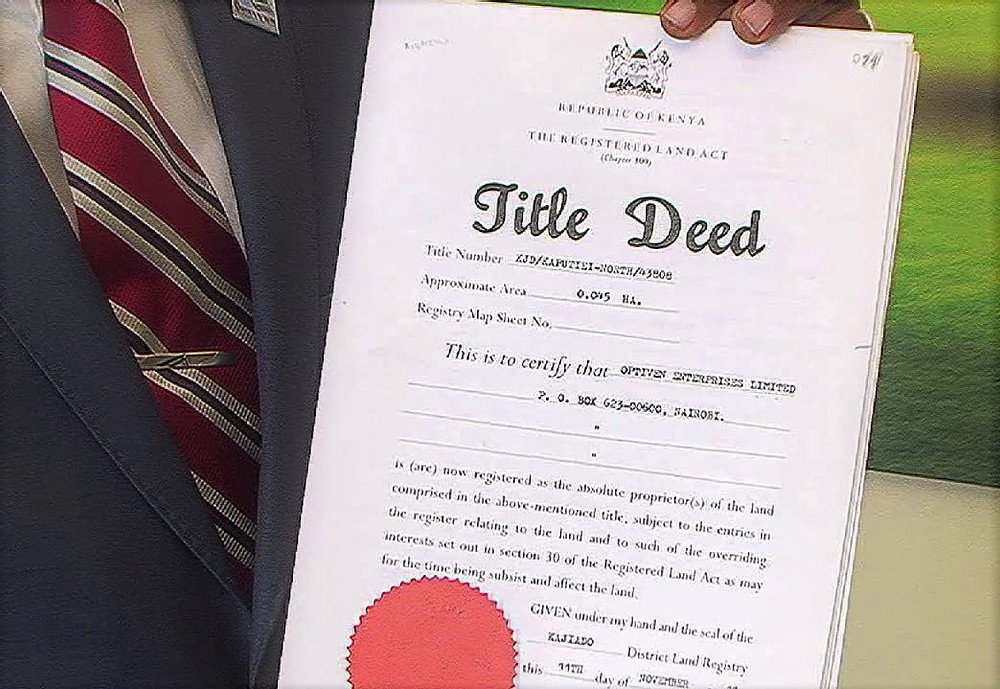
A title deed is a document that gives legal ownership to the owner of a property. In Kenya, title deeds are used as proof of ownership and to authenticate property transactions. In our view, buying land that has a genuinely proven title deed is one of the safest ways you could ever acquire land in Kenya.
That said, there are several types of title deeds according to the Kenyan law. This is because the property can be of various types, as I will be explaining. Here are the types of title deeds and what they represent:
Types of Title deeds in kenya
Indenture
An indenture is a type of title deed that was formally used to exhibit land ownership under specific laws. This is like a land ownership certificate that was used before title deeds.
Grant
A grant is a document that is issued by either the government or county council that gives ownership and land use rights to a piece of land to whoever was issued with it.
Certificate of Title
A certificate of title is a legal document that is issued upon subdivision of land. If you own a large piece of land and subdivide it into smaller lots for sale, then each lot will be issued with an individual certificate of title. This validates its existence as an independent lot but does not change its purpose or use that it was zoned for.
Certificate of lease
A certificate of lease is issued to land that is to be “rented” out for a specified period of time. Whoever gets the lease certificate is entitled to use the land for a given period of time but does not own it.
Absolute Title deed
An absolute title is a document of freehold land ownership. It gives you the right to use the land indicated without any restrictions.
Sectional Title
If you buy an apartment within a building, then you own a specified part of that building. To validate this ownership, a sectional title is given to you, the owner. This gives you legal rights over the apartment.
Sections of a title deed
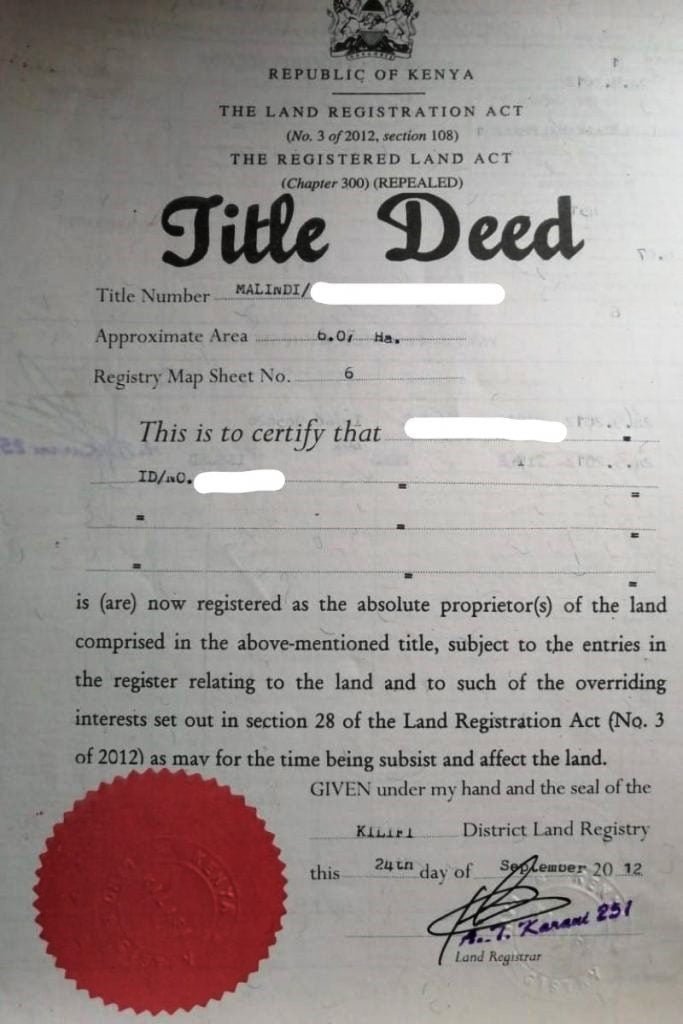
A typical title deed is divided into four main sections as follows:
a. First page
This is what you see when you hold it. It has the title number, estimated size of the land, map sheet number, name of the owner, and National ID number. In brief, it also shares an explanation of the type of land and has a seal and date of issue.
b. Second page
At the top it has 2 sections, A and B, described as “property” and “proprietorship.” This provides further details such as the parcel number, details of the owner, a signature, and a stamp.
c. Third page
This section provides in-depth details on the history and records of the land. It is called the encumbrances section. This is where any court cases, loans, mortgages, disputes, or any other special detail about the land are made for references.
d. Fourth page
This is more of the back cover; it is almost similar to the first page in terms of the details. It records the title deed number and the document code at the bottom.
importance of title deed
- It is sure proof that you own the property and can be used to challenge any illegal action taken against the property. If, for instance, a person invades your plot and builds on it, you can use your title deed to take them to court. It will serve as an exhibit of true ownership of the lot.
- A title deed can be used as security when taking a bank loan. Land is a good investment, but it can be hard to liquidate it when you need money fast. Having a title deed enables you to borrow against it and get money instantly without having to sell the asset.
- It makes it easy to sell your property without any trust issues from prospective buyers. On the same note, it makes your property safer to buy. And hence a lot more buyers will engage with you if you have a title deed as opposed to if you don’t have one.
- Lastly, a land title deed is really useful when issuing inheritance to your children. It will safeguard them from land grabbers, and they may either build or sell the property without any legalities.
Frequently Asked Questions
A title deed is a document that proves legal ownership of a piece of property under the Kenyan law.
A title deed provides much more information regarding the property. Crucial details such as any legal constraints on how the property can be used while the certificate of title is focused on confirming ownership.
A title deed transfer ranges from Ksh 50,000 to 200,000 but might be higher depending on any additional costs such as the search fees and stamp duty.
You can check your title deed online by logging in to your E-citizen account. And then select the option ‘Land Search’ from the Ministry of Land portal. After this, enter your title number and fill out the rest of the form.
To know if a title deed is fake, you must conduct an official land search using the title number on Ardhisasa. Or you may visit the Ministry of Lands office to confirm the true owner and details.
A title deed can have two names where both of the names represent joint owners. This is common, especially when land is under joint ownership and both parties want to be equally recognized. This is common in marital property or inherited property.
For you to get your new title deed, it takes around 14 working days, which is around 2 weeks.
If for any unfortunate reason your title deed gets lost or destroyed, you can apply for a new one at the Registrar. But you will be required to provide convincing evidence to avoid any duplication.