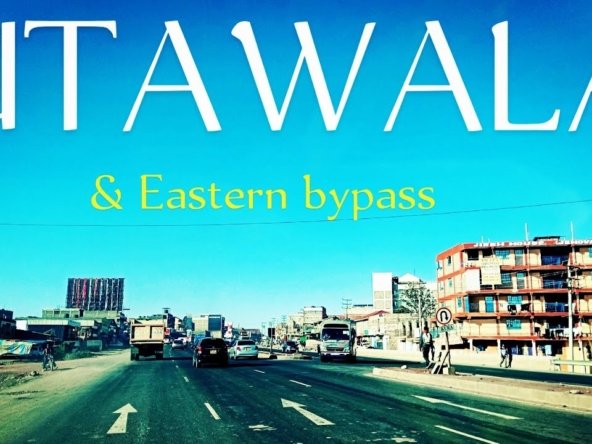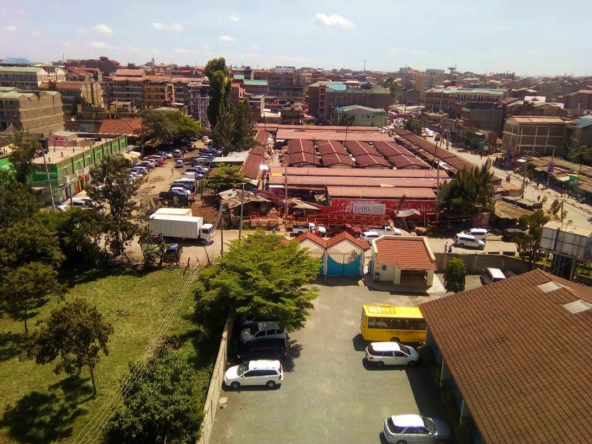
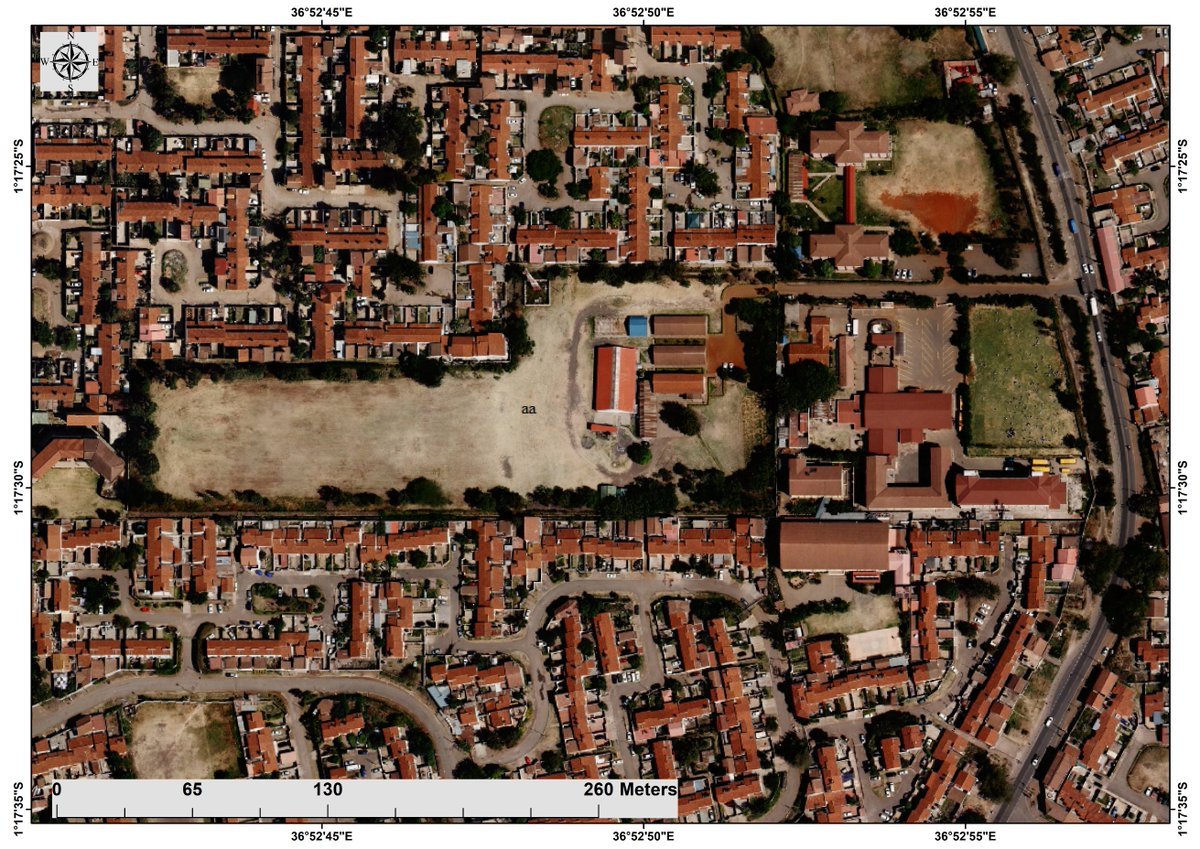
Buruburu is one of Nairobi’s most known and historical estates dating back to the 1960’s. It is located within Embakasi West Sub-County, Nairobi County. Locally referred to as “Buru”, it has earned a spot as Eastland’s crown jewel with its gated estates and well-to-do inhabitants. The controlled development in the area has also made it attractive especially for families seeking a secure home for their children. And what is even more exciting is its proximity to the CBD which has also attracted many professionals. However, Buruburu has been on the decline in terms of its appeal, you see, if you grew up in the 80’s, Buru was like the present day Karen or Runda. Overtime, this exclusive appeal has been lost following urbanization and an increase in population. In this guide, we will be diving into Buruburu and exploring some of the most asked questions.
History of Buruburu
The history of Buru can be traced as early as 1962 when the Regional Commission of Nairobi proposed an eastward expansion. This was done to address the housing shortage especially for civil workers and those who worked in Nairobi. The idea was given a nod and 1000+ dwellings per phase were constructed. This ranged from 3 – 4 bedroom maisonettes to 2 – 3 bedroom bungalows, typically what a suburban family would love.
The development was designed in 1974 on about 85 hectares of land. Owing to the size of the project, it was developed in 5 phases over about a decade. Today, we refer to those areas as Buruburu phase 1, Buruburu phase 2, Buruburu phase 3, Buruburu phase 4 and Buruburu phase 5. Its construction highlighted a shift from government-built rental housing to mortgage-based home ownership. The focus being on the emerging middle class. Each face has got similar planning, what differs is the density, housing types and modernization.
Upon its completion in the mid-1980s, Buru Buru become a coveted address. It attracted senior government officials, business leaders, top professionals and expatriates. It was like a Kileleshwa of today without the towering sky-scrapers and unplanned densification. Its execution and success made it a strong model estate for such developments across Commonwealth African countries.
However, Buru buru’s fall from grace has been as a result of rapid urbanization which has been caused by factors such as;
- Illegal property extensions & structures
- Commercial activities within residential zones
- A rising population density that strains resources
The result is a shift from exclusivity to a predominantly low- and middle-income population.
Overview of Buruburu
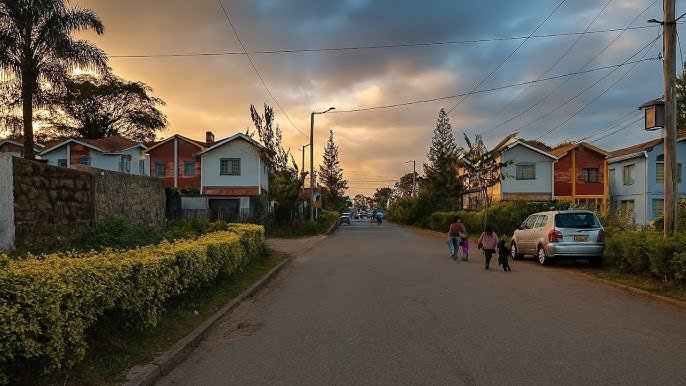
Buruburu borders other estates that were also developed with such an intention but failed along the way. While the idea of government built houses worked well for Buruburu, trying to copy paste the model for low-income housing proved to be quite difficult. This has made Buruburu a diamond in the rough next to the areas below:
- Jericho
- Umoja
- Donholm
- Kariobangi South
- Tena
Property market in buru buru
Average Rental Prices
Amid its declining status, Buru buru still has a great appeal, especially towards families. One thing that parents love is an environment they can control for their children. The gated courts, own-compound houses and organized way Buru buru is built gives this to most families. As a result, many people often request for units in the area and seeing that we rarely have new constructions, the demand has pushed prices up. The table below breaks down the typical rent charges for most units.
| House Type | Average Rent (Ksh) |
| Bedsitter | 8,000 – 13,000 |
| One Bedroom | 12,000 – 17,000 |
| Two Bedroom | 19,000 – 30,000 |
| Three Bedroom | 33,000 – 50,000 |
(Note: Prices vary depending on phase, renovations, and proximity to main roads.)
Rental demand & market trends
Why is demand high?
If you are an investor and are wondering why demand is high in Buruburu, I have broken down the reasons below. To enter such a market, you could possibly wait for a distressed sale and buy the unit at a lower market price. You can then renovate it and add modern finishes before renting it out for a premium. The demand for modern renovated units has been quite high in Buru buru.
- Limited supply compared to rising population growth.
- We have an expanding middle class seeking structured housing.
- Gated community design offers security especially for families.
- Standalone maisonettes and bungalows ideal for privacy.
- Close proximity to CBD and major highways making job commutes shorter and less hectic.
Future outlook of the area
Here at KejaFinder, our outlook for Buru buru is green. This is not complicated to arrive at seeing that the market is what we call a “captive market”. With the strict regulations against high rises and continued construction, renters are stuck with the only units that are available. In such a market, being a bit different can make your unit stand out from the competition. Our overall outlook is:
- Continued steady rental demand from the growing middle-class, especially families.
- Increased subdivision of units to maximize returns as further construction is capped.
- Gradual renovation and modernization by investors to attract better paying tenants.
- Potential appreciation if zoning regulations are better enforced.
Schools in Buru buru
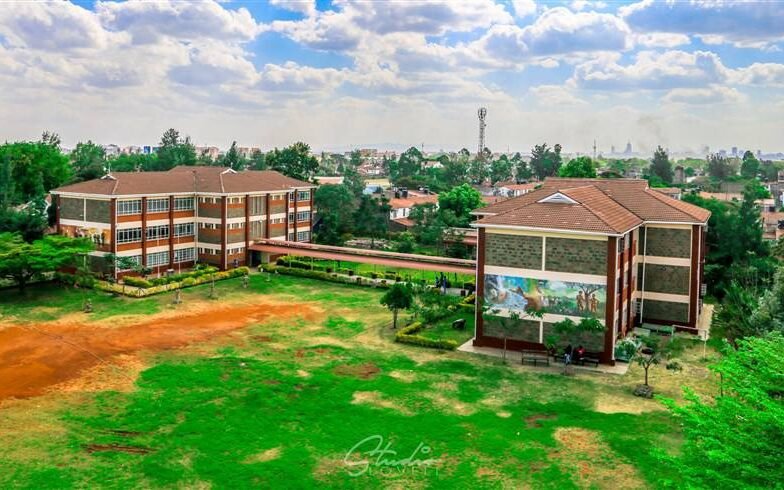
1. Buruburu Institute of Fine Arts
Specializes in creative arts education including music, dance, and visual arts. Caters to children and youth programs, nurturing talent in performing and visual arts.
2. Buruburu Girls High School
A public secondary school offering the Kenyan CBC/8-4-4 curriculum. Known for strong academic performance and extracurricular activities, serving girls from Form 1 to Form 4.
3. PCEA Umoja Academy
A private Christian-based school offering primary education. Emphasizes academic excellence, discipline, and holistic character development.
4. Brainstorm Junior Academy
A private primary school providing CBC-aligned education. Known for competitive KCPE performance and strong focus on academic results.
5. St. James Academy
Offers both kindergarten and primary school education. Focuses on academic foundations and moral development in a structured environment.
Where to shop in Buru Buru
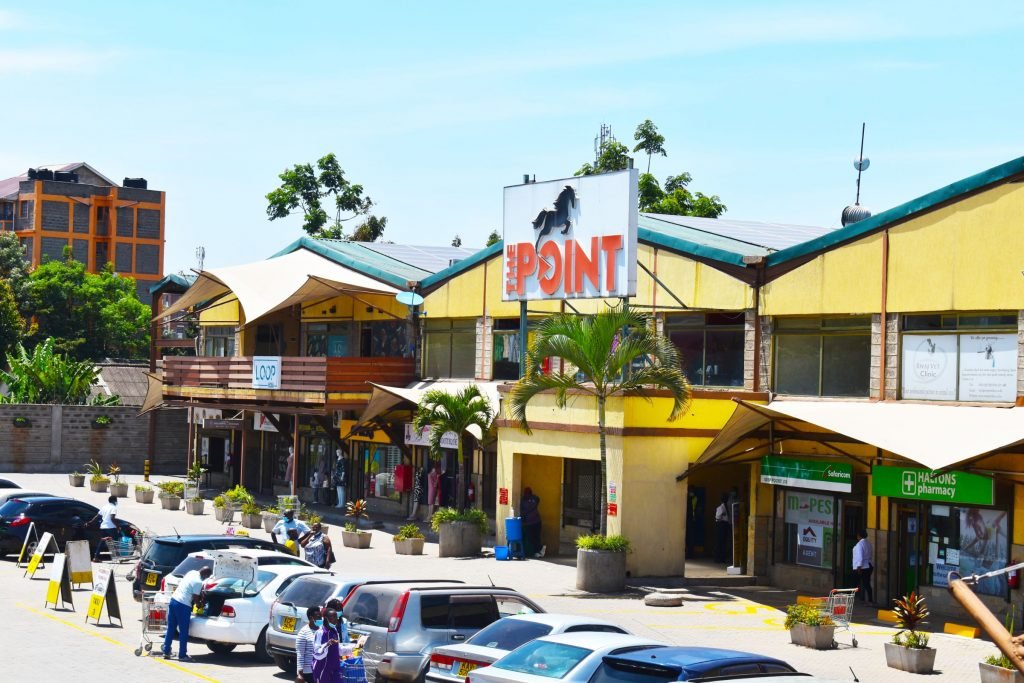
1. Buru Buru Shopping Centre
The main commercial hub of Buru Buru, this shopping centre hosts a mix of supermarkets, banks, salons, restaurants, hardware stores, pharmacies, and small businesses. It serves as the estate’s central marketplace where residents handle daily errands, financial transactions, dining, and retail shopping in one convenient location.
2. Phase 3 Shopping Centre
A busy neighborhood retail center popular with residents of Phase 3 and surrounding areas. It features mini-supermarkets, local eateries, barber shops, salons, hardware outlets, cyber cafés, and small-scale traders offering affordable goods and services.
3. Jaza Supermarket
A community-focused supermarket offering groceries, fresh produce, household essentials, and everyday items at competitive prices. It is especially convenient for quick shopping trips and serves nearby residential clusters.
4. Quickmart
A well-known Kenyan supermarket chain providing a wide range of groceries, electronics, fresh foods, and household goods. Its presence in Buru Buru gives residents access to modern retail shopping within the estate.
5. Naivas Supermarket
One of Kenya’s largest supermarket brands, offering extensive product variety including groceries, bakery items, fresh produce, and household supplies. It is a major shopping destination for bulk purchases and weekly family shopping in and around Buru Buru.
Where to worship in buru buru
- Vosh Church International
- Full Gospel Churches of Kenya
- ACK St. James Church
- Blessed Sacrament Catholic Church
- Buruburu Baptist Church
Healthcare centers in buru buru
- Aga Khan University Hospital – Buruburu Clinic
- Coptic Hospital
- Bliss Medical Centre
- Njiru Health Centre
- Avenue Healthcare Buruburu Clinic
How to get to Buru buru
Buru Buru’s location has made it very accessible and I guess this is one reason attracting so many working professionals. It can easily connect to Nairobi CBD, Thika Road, Mombasa Road and areas along Kangundo Road.
- Jogoo Road connects the estate to Nairobi CBD in about 15 minutes (depending on traffic).
- Outering Road links to Thika Road and Mombasa Road.
- From CBD, matatus (Route 58) operate frequently in the area.
- Boda bodas and ride-hailing services are widely available.
Pros & Cons of living in buru buru
i. Pros of living in buru buru
- Close to Nairobi CBD – Buru is located just 8 – 10 km from Nairobi CBD which makes it an attractive and affordable choice if you work in Nairobi.
- Affordable rental options – The quality of most houses are not that modern so rents are not high for what you are getting in terms of location, security and a well-gated community.
- Strong road connectivity – Buru buru’s accessibility to majority of Nairobi’s nodes is quite a distinguishing factor. You can work in Mombasa road, Kangundo road, Nairobi CBD, Thika road and other nodes and easily commute from home.
- Gated community layout enhances security – The gated community with manned points of entry makes it very secure. In fact, if you tour the area on weekends, you will find so many kids playing happily on the roads of the estate. The presence of Buru buru police station also adds to the security of the area.
- Historical prestige and established infrastructure – Though the prestige has worn out quite substantially, Buru buru has retained some levels of class which in a way pours out into the rents. Renters will often overlook finishes and the quality of houses because of the area.
II. Cons of buru buru
- Aging housing stock – Lack of renovation has made the houses in Buru buru age significantly. This has affected the rents, appeal and prestige of the area.
- Increased population density – Urbanization and the growth of the working middle-class has made the area “crowded” and with the aging infrastructure, it has made the area less attractive.
- Informal developments and zoning issues – The illegal developments and increased commercialization in residential phases has become an issue. Instead of organizations seeking office space, many opt for the residential houses. This has resulted in many issues including security. The illegal extensions that are rented out or moved to Airbnb have also made it difficult to control who lives there. This further erodes the exclusivity.
Frequently Asked questions
1. Is Buru Buru a good place to raise a family?
Yes, Buru Buru is considered a good place to raise a family due to its gated layout, access to schools, and proximity to essential amenities.
The best phase to live in depends on your budget and preference, though earlier phases are often preferred for their larger plots and mature surroundings.
Buru Buru is generally safe, especially within gated clusters, although security levels can vary by phase and location.
The average rent in Buru Buru ranges from about Ksh 20,000 for a 1-bedroom to approximately Ksh 50,000 for 3-bedroom houses, depending on the unit type and condition.
Yes, Buru Buru is a good area for property investment, particularly for steady rental income driven by consistent middle-class demand.