Every market has its own bad-actors and the rental market is no different. There are countless stories of Kenyans who have been duped in their home search. Whether it is due to greed, ignorance or just not knowing, conmen are making a killing from Kenyans and it is not good. You see TRUST is really important in the real estate world and whenever it is eroded, it becomes hard to restore. In this blog, I will be highlighting common scams as well as showing you how you can protect yourself and your hard-earned money from scammers.
Common Scams in Nairobi
People are either conned at their point of greed or desperation. You will be seeing this clearly in the scams below. Knowing what your weakness is, is a step closer to protecting yourself.
1. Payment Before seeing the Unit
As absurd as it sounds, people are actually paying for units they have not seen. You come across pictures of a beautiful looking apartment on Jiji or Facebook and you are convinced it’s a deal. Upon contacting the “agent” they ask you pay a commitment fee or they claim the unit is being competed for. So for you to secure the unit, you have to pay upfront.
Never fall for this trap, NO VIEWING = NO MONEY, simple.
This scam is directed towards desperate renters who are looking to find a house quickly. To avoid this, start your house-hunt early or use verified agents. Genuine agents will ask you for viewing fees after taking you around vacant units, but it’s better than getting conned.
2. Facebook posts with Comments Turned off
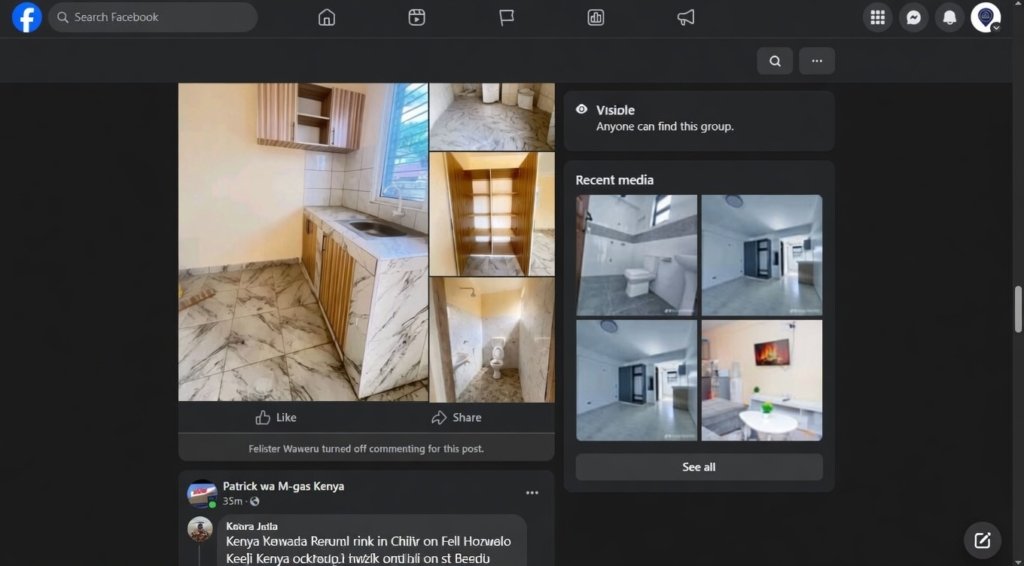
Most conmen have turned towards social media to scam innocent Kenyans. One such platform has been Facebook and especially local area groups. Scammers post vacant units and wait for you to message them. However, since most of them are known, they will turn off the comments on their posts to avoid any victim from commenting negatively and damaging their reputation.
Don’t get me wrong, there are many good agents on Facebook who advertise vacant properties, the only difference is that genuine agents don’t turn off comments. So if you see a post in your local group with hidden comments, DON’T even message them.
3. Agent claims "another person wants the unit"
Whenever an agent rushes you to pay for the house claiming that another person wants the same unit, they could be scamming you. Scammers use fear to push you towards paying. This can happen after seeing the unit and in most cases, you will find out that they don’t even have the right to be showing out the vacant unit. Scammers know that most people won’t pay for a unit they have not seen, so some look for rental units that are easy to access and they use them to bait renters.
After you have seen the unit, they will begin pressuring you to pay the deposit because they don’t want you to lose the house. In Kenya, houses are rarely in a bidding war, so whenever you see this line get used on you, stay extra alert.
4. Unit Looks too cheap
Remember me telling you that people are conned at their point of greed or desperation? Well, in this scam, it is always about how greedy you are. Here’s how this scam plays-out:
- You are browsing through the internet and see a beautiful, spacious studio apartment in Kilimani and the rent advertised is KES 8,000 per month.
- You think you have found the deal of your life and text the listing agent on the platform
- They then ask you to send some money and that is how they disappear and block you
If a deal looks too good to be true, then chances are it is not true.
5. "Tuma Rent kwa hii number"
Aside from targeting people looking for a house to rent, scammers have discovered a new group of victims and that is people who are already renting. You may receive a message like “Tuma rent hii number” or a more polished version informing you that rent payment details have changed. And as simple as this sounds, I nearly fell for this one myself.
This scam can easily get you if you are a new tenant or if the management/landlord is doing a poor job at communicating with you. It often thrives because of the communication gap there in between and when a new tenant comes in and doesn’t know where to pay, they will easily fall prey.
6. Agent refuses to meet physically
If you schedule a house viewing and the agent refuses to meet you physically, this could be a red flag. One question you should ask yourself is “why are they not meeting you?” Most scammers will avoid meetings people as they are always afraid they might be caught. Any attempts to dodge you or make you pay without seeing them or the unit should be treated as a red flag.
How to protect yourself from scammers
1. Never pay before viewing
Always make sure that you take a physical visit to the rental before committing to any payment. While there confirm who to pay rent to, who the caretaker is and ask a few tenants if you are not sure. The only fee that you might have to pay is a viewing fee to the agent who is helping you in the search. Which typically ranges from KES 500 – KES 2,000 depending on the unit.
2. Conduct Due diligence
Doing your due diligence to know the landlord is another step in the right direction. Most units are either managed by a property management company or by the owner through a caretaker. I like telling tenants to make sure that they are aware of the legitimacy of the owner before moving in. You should also confirm details like;
- Actual rental charges
- Service charges (e.g., water and garbage fees)
- Check the size of the unit & if it meets your needs
You would be shocked that in some cases, you might be paying higher rent than your neighbors. Always ask current tenants about the place to see if it is as suitable as they claim.
3. Insist on a tenancy agreement
Insist on getting the tenant-landlord agreement. This document contains the terms of engagement between you and the owner. It typically contains;
- The amount of rent
- Your rights as a tenant
- The obligations of the landlord
- Deadlines and enforcement in rent payment
- Clauses on rental increase
If you feel short changed in any way and decide to take the landlord to the rent tribunal or court, without any agreement your case will be dead on arrival. Also having a rental agreement is the best way to ensure the legitimacy of the person renting the unit out to you.
4. Confirm Payment details
If you receive a message claiming rental payments have been changed, call your landlord first to confirm. You can even ask your caretaker or other tenants if they received the same details. If you find yourself alone, chances are that it is a scam. Moreover, the change of rent payment details will be done by the person you are familiar with so if it is a new number, it is probably a scam.
5. Research on Market Rents
Knowing the market rent in an area will shield you from falling into many scams. If for instance 1-bedrooms in an area range from KES 15,000, if you find a unit going for KES 9,000 you might need to ask some questions. It could be that the unit is older with poor finishes or it could be a scam. Knowing market rents will also prevent you from being overcharged, some units in Nairobi even though genuine are plainly overcharged. This ensures that you are paying for the value you are getting.
You can even go around comparing different units to see what each offers. Overpriced units will charge more in rent but have little or insufficient amenities for the price.