Installing solar panels is a long-term investment. However, small mistakes during installation can lead to poor performance, damage, or higher costs later. What is quite shocking is the fact that most customers are not aware of such faults until it is too late. For this blog, we have decided to highlight some of the common issues installers make, as well as how you can easily spot them.
Here are some of the most common ones:
1. Failing to use full-length mounting rails
Some installers, in a bid to cut costs, end up using short mounting rails to hold the solar panels on the roof. Railings are the horizontally placed metallic supports that hold the panels and connect them to your roof. They resemble a railway track. When short railings are used, there is reduced panel support, which can cause
- Panel flexing
- Cracks over time
- Damage during strong winds
To avoid this, make sure your installer uses full-length railings to hold the panels in place.
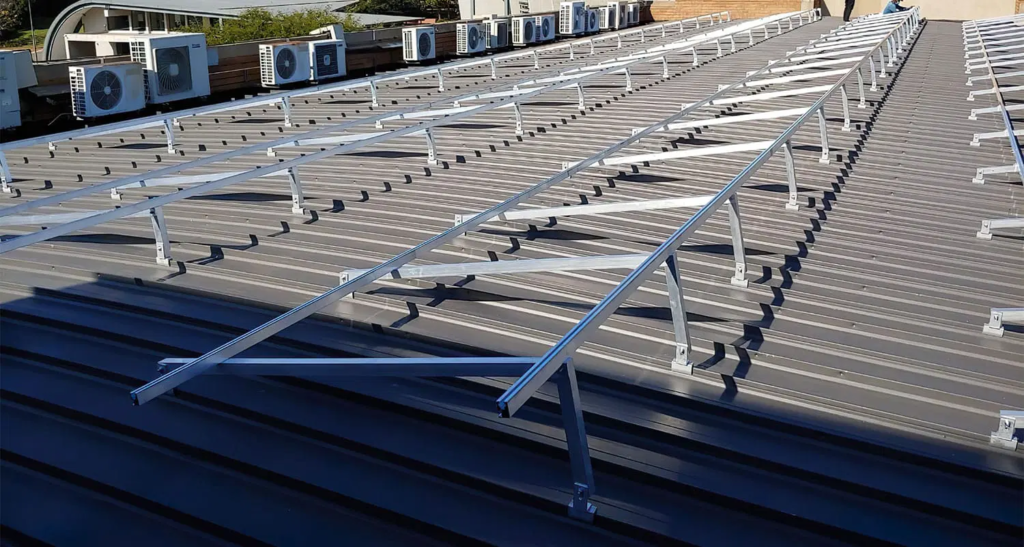
This is how railings should be placed, as full length not partially.
2. Incorrect system sizing
Another problem many people encounter is incorrect system sizing. Your household usage is what determines the size of your system. If you are a heavy consumer, then your solar system will be large. Similarly, if your consumption is small, then your solar system size will be small. If your installer is not experienced, they might end up deploying the incorrect system size. The result is a system that is either
- Too small, leading to power shortages, or
- Too large, resulting in unnecessary costs
This usually happens when installers don’t properly assess household energy usage. The same issue could happen if after installation you add more appliances.
3. Poor panel orientation
Your panel is what captures the sun’s energy and converts it to power your home. If by any chance the panel is placed in the wrong direction or in a manner that doesn’t optimize the sun, then you will end up with reduced energy output.
Solar panels work best when:
- Facing the correct direction
- Installed at the right tilt angle
Poor orientation reduces energy generation, meaning:
- Slower return on investment
- Continued reliance on grid power
Correct positioning can make a big difference in daily output and help you recoup your investment faster.
4. Using mismatched components
Let me begin by pointing out the fact that nowadays, there are so many solar manufacturing companies. Most of them manufacture all the solar components you might need, from panels to inverters and batteries. Installers have discovered that different components cost differently. And in an attempt to save on money, they end up purchasing the components from different manufacturers. This mixing of incompatible panels, batteries, and inverters often leads to:
- Frequent system faults
- Reduced efficiency
- Shorter equipment lifespan
To avoid this, make sure all components used are compatible and certified. This might come at a slightly higher upfront cost, but you are assured of a long-lasting system.
5. Not planning for future expansion
There is a saying that states, “Failing to plan is planning to fail,” and this could not be too far from the truth. Many homeowners later want to add panels, an extra battery, or higher-capacity appliances. If your system is not designed with expansion in mind, upgrades end up becoming expensive. Or worst of all, you outgrow your system, which causes more problems down the line.
6. Placing components in inaccessible areas
Most people “hide” their inverters in an attempt to give their homes a minimalist look. And I totally get you; the noise and sight of inverters and batteries is not something you want to be looking at every day. However, the issue comes in when they are placed in inaccessible places in the house that you end up forgetting about.
Placing your components in the attic or in the basement can lead to the system getting damaged without your knowledge. I often advise people to install the system in a designated room where they can occasionally inspect it or even clean it.