What is Airbnb?
By now, I am sure a majority of you readers are familiar with the term Airbnb. For those who might be green on this, it is a platform that enables owners to rent out their properties to short-stay visitors. The concept behind it is quite simple. And it allows landlords to make an extra coin from parts of their property that would otherwise be vacant. The platform, which began in 2008, has since grown to unicorn status, with profits growing to a peak of $4.3 billion back in 2023.
Why airbnb gained popularity
Back at home, many investors have gotten wind of the profits. And many people have invested in the sector in droves. As of the last reports by KNBS, Kenya has more than 10,000 listings under the platform. The platform has gained popularity in Kenya due to several reasons:
1. High profits
In a residential market where long-term residential is yielding a maximum of 8% annually, Airbnb allows you to recoup your investment way faster. Take the example of having a 1-bedroom in Kileleshwa and renting it out for Ksh. 60,000 a month in the long term. A similar unit on Airbnb goes for about Ksh. 8,000 a night. So if you are booked for just 10 days in a month, you would have made more than a person renting out long-term.
2. Convenience
On the side of renters, Airbnb removed the lengthy and tedious check-in processes associated with hotels. With just an app, you get access to countless listings anywhere. It also makes your stay feel more like home, and you have the flexibility to move around, trying different areas for different experiences.
3. Cheaper than hotels
Hotels come with quite a big price tag attached to them. This is because of the huge number of staff and operational expenses they incur, which are passed down to you. Airbnbs being run by just small teams end up with fewer expenses and can therefore charge less.
Surge of airbnb in kenya
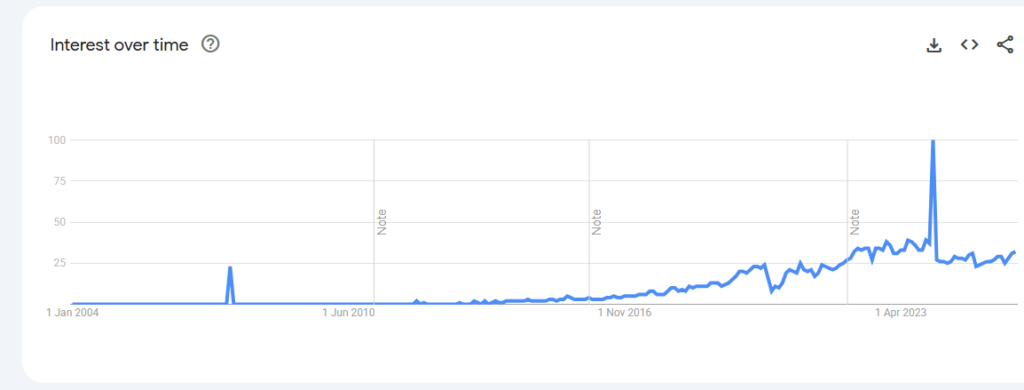
In Kenya, as seen on Google Trends, Airbnb popularity skyrocketed in 2024 as more people got to know of it. Since then it has been a love-hate relationship for most Kenyans. Some love it for the returns it gives them, while some hate that it has led to some issues with the residential market. Issues like higher rents, reduced privacy & insecurity, especially from families. Figures show that Airbnb has over 10,000 listings in Kenya, which I think is an underestimation.
Unforeseen impacts of airbnb
When Airbnb started, people saw it as just another way to make money. However, since its rapid growth, it has led to a lot of distortion in the housing market as well as to the social fabric of most areas. Below are some of the unexpected effects Airbnb caused and how they affect you and me.
1. Increased rents
A report by Knight Frank said that in late 2023, rents had grown a record 10% in just 2 years since the platform gained popularity in Kenya. From the report, 15% of units under the long-term rental model had transitioned to Airbnb, straining the supply of long-term units. With demand still growing in most Kenyan towns, this reduction of units in the market has pushed rents up. People’s real incomes (income adjusted for inflation) have also been on a decline. Meaning that higher rents make renters dig deeper into their pockets each month. For instance, in Nakuru at Runana Apartments an Airbnb host reported that rents rose from Sh30,000 to Sh37,000 since 2024.
2. increased insecurity
Initially, if you grew up in a rental, you basically knew everyone in the block. This sense of community as well as neighborhood was pivotal for security reasons, as people knew who belonged there and who didn’t. With Airbnb coming into the picture, people rarely know their neighbors, making it easy for criminals to get into apartments and steal. Moreover, some Airbnbs have given rise to promiscuity and even shady activities that have occasionally led to deaths. Since minimal information is required to book a unit, unlike a hotel, most criminals find it an easy way to prey on unsuspecting people.
3. Small businesses close down
This might seem like a far-fetched effect, but think of it for a second. Having long-term renters meant that small businesses like shops could grow around the household consumption of families. When a part of these long-term renters are priced out, small shops that benefited from their presence go away with them. Most renters in Airbnb either order food or buy from restaurants, which reduces their impact on local shops.
The dilemma of Airbnb
The government has gotten wind of these unforeseen effects, but there is a dilemma. Airbnbs have been a source of income for KRA. Owing to the fact that hosts are required to pay a withholding tax of around 5% for domestic residents and 20% for international hosts. The dilemma comes in trying to balance the benefits and the effects caused by the platform. On one hand, it is creating jobs and increasing spending, which is a source of tax. While on the other hand, it is contributing to an unseen housing crisis in an already worsening housing sector.
My take on the issue
We are not the only country experiencing the “Airbnb Effect.” Europe saw this way earlier than us, and some countries like Italy have decided to do away with Airbnb by 2028. Others, like France and Spain, are also moving to legislate the platform out of their communities, citing worsening effects on their housing market.
In Kenya, we typically say, “Ukiona mwenzako anayolewa, tia kichwa chako maji.” Loosely translated, this means that if you see your friend getting shaven, you should start preparing yourself for the same. I think we are ripe for some sort of regulation in the sector without hurting it entirely.