Iron sheets or as we commonly refer to them here in Kenya as Mabati are one of the most common ways of roofing houses. Their versatility, in that you can use them for; roofing, walling or even as a fence at a very affordable price point has made them popular. However, despite them being this common, many people are still not yet familiar with the types, gauges and prices of the various Mabati options. In this guide, I will be diving into the nitty-gritty of Mabati as well as doing a price breakdown about the same.
Understanding Mabati As a Material
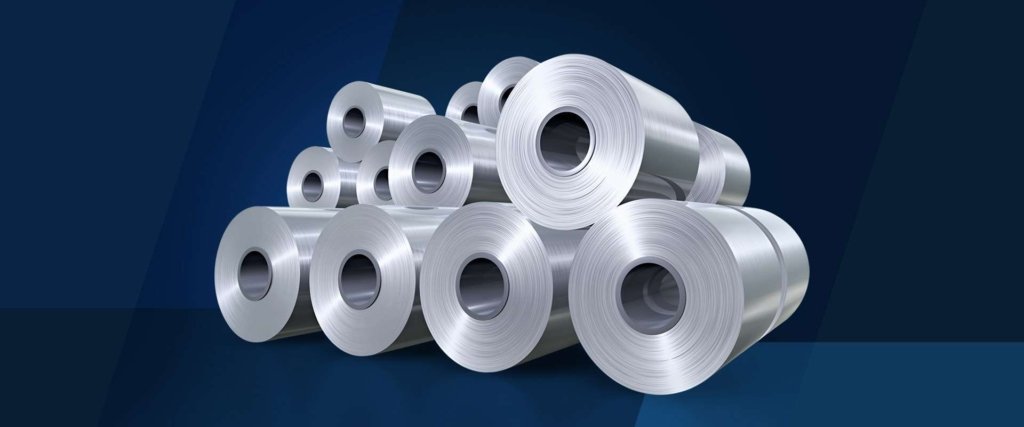
Mabati is made out of iron which is melted and passed through rollers to make it thin. Over the years the technology to make iron sheets has definitely changed but the process is still the same. Unlike other roofing materials, iron sheets manufacturing is quite straightforward and that is why they are priced affordably.
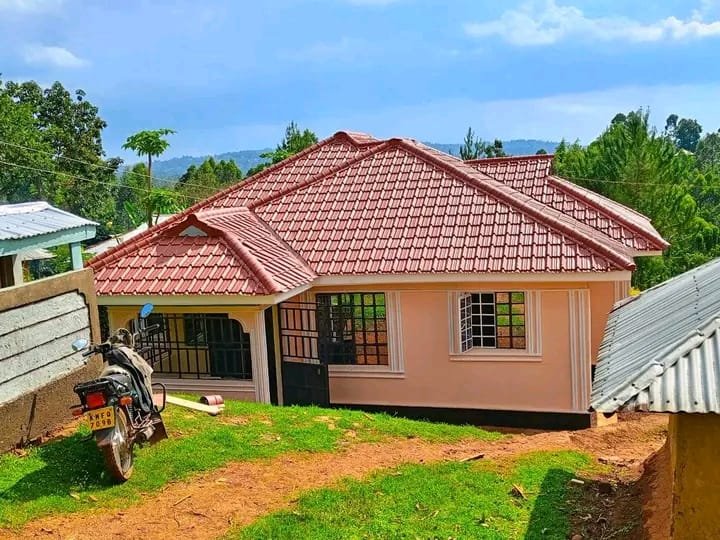
Initially, mabati was viewed as a poor man’s building material but as more innovative designs came into the market, many people have begun warming up to the idea. Today, you can easily get Mabati designed like a tiled roof and from a far, no one would be able to spot the difference.
There are several reasons why homeowners and contractors prefer Mabati as a construction material;
They are relatively affordable – depending on the type, gauge and quality, Mabati is quite affordable to the common Kenyan with prices going as low as Kes 680.
Have many uses – you can use Mabati for nearly anything; roofing, walling, fencing, you name it.
Easy to install – the cost and expertise of Mabati installation is also low. You can even get your local fundi to fix it for you as it requires minimal skills.
Durability – for the price they are sold at, Mabati is quite durable as a building material. If you get the right quality, they can last can last you anywhere from 15 – 30 years.
Factor when buying mabati
Your choice of Mabati depends on several factors that dictate the price you should pay, the gauge you should choose.
a. use of the mabati
As I had earlier explained, mabati can be used for various purposes. Your choice of mabati will definitely be different if you plan on using it as a roofing material compared to using it for fencing. While some mabati can be used for multiple purposes, I recommend using roofing mabati for roofing etc., Your roofing mabati may need to be more durable and resistant to the elements as it is exposed constantly to the elements. Similarly, if you plan to run services like solar on your roof, then you might need a stronger mabati to bear the weight of the panels.
b. environmental conditions
In places like the coast, you will need to select mabati that is well coated as the salty condition there are known to destroy roofs. Moreover, if you live in an area where hail rain is common, you need mabati which is much thicker to prevent it from being destroyed. Always ask your local hardware for the best mabati for your region, they will definitely have you sorted. Similarly, if you live in a rainy area and want a sound-proof mabati, the stone-coated option might be your best pick.
c. cost
The question here is how much are you willing to spend? If you are on a budget, then expensive mabati like orientile mabati might not be for you. However, it is important to note that cheapening out might be costlier in the long-run. If you buy cheap mabati for roofing, and you end up replacing them three times in a span of 10 years, you are definitely spending more than if you just went for a slightly expensive but durable mabati.
d. Aesthetics
A home must definitely be beautiful and your choice of roofing mabati can either make or break this. If you prefer an aesthetically looking option, stone coated mabati or the versatile option might be a good choice for you. The two are known to come in a variety of colors and blend well with many architectural designs.
E. Gauge
The gauge of a mabati is simply its thickness. If you have a mabati with a gauge 28 and another with 32; the 28-gauge mabati is thicker than the 32 one. It might sound a bit confusing but the lower the gauge number the thicker the mabati and vice versa. The lower the gauge the costlier and stronger the mabati and this depends on your intended use.
Types of iron sheets and their prices
a. Corrugated mabati
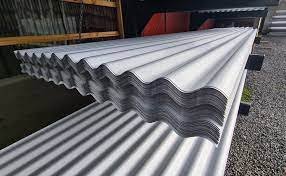
The corrugated mabati is the traditional iron sheet with wavy pattern. It is perhaps the most common roofing type. It is mainly used for; rural homes, animal sheds or temporary buildings like site houses. They are priced between Ksh 350 – 600 per meter making them the most affordable option out there.
Advantages
Disadvantages
Affordable and cost-effective
Can rust easily if not properly coated
Easy to install and handle
Less stylish compared to modern designs
Widely available across Kenya
Noisy during heavy rain or hail
b. Box profile mabati
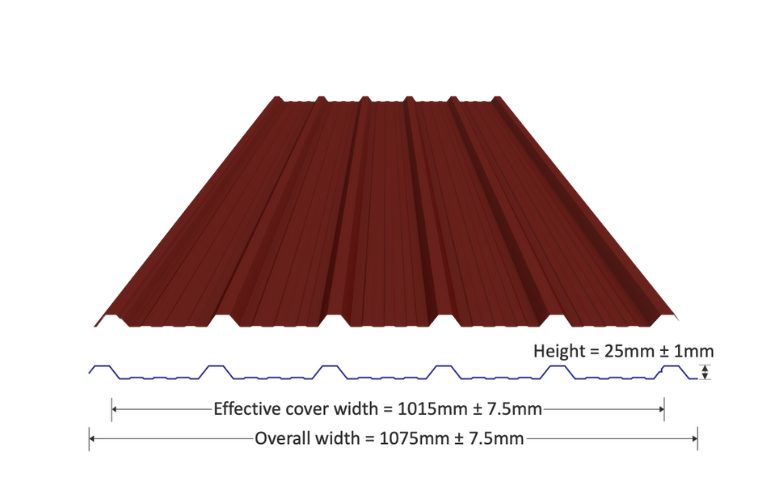
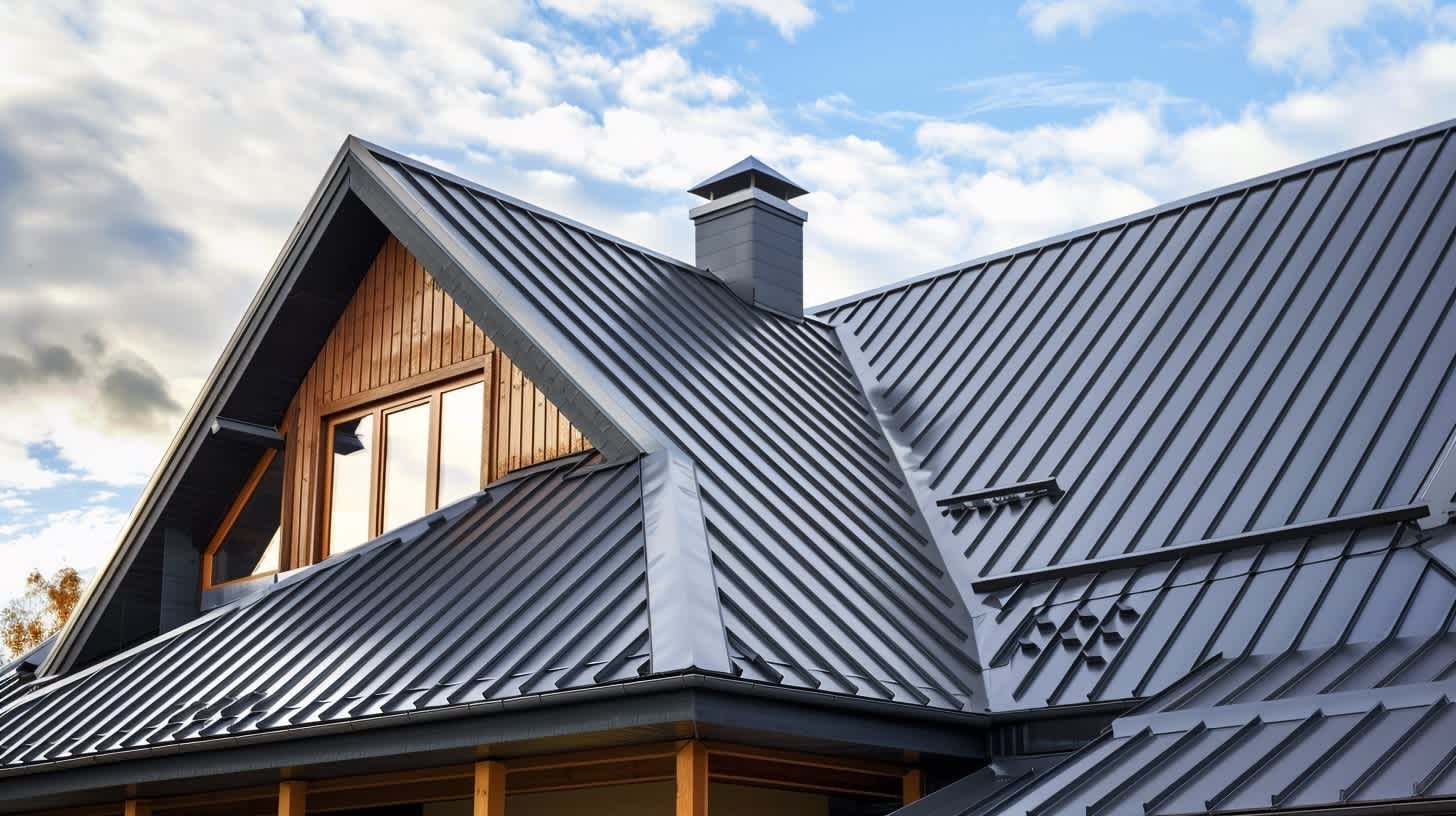
Box profile mabati are flat sheets with box-shaped ridges. This gives them a neat and modern look compared to the wavy-pattern in corrugated mabati. You might even confuse them for container homes. They are used in residential homes, commercial designs and institutional buildings like churches. The price of a box-profile mabati ranges from Ksh 600 – 1,000 per meter.
Advantages
Disadvantages
Sleek and modern appearance
Slightly more expensive than corrugated sheets
Durable and long-lasting
Heavier, requiring stronger roof support
Better water run-off due to box-shaped ridges
Noisy during rainfall
c. Versitile Mabati
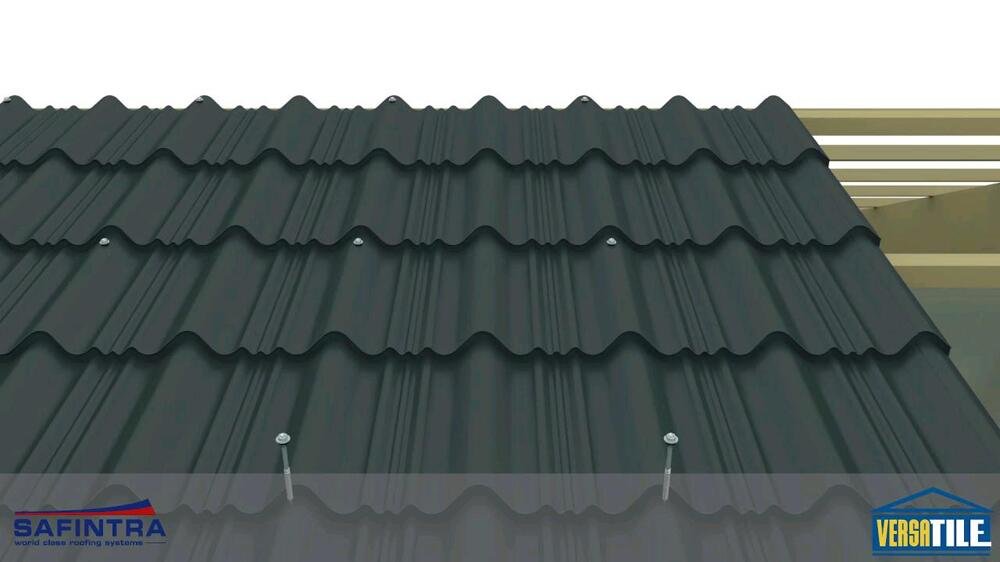
The versatile mabati is a tile shaped steel sheet that resembles a clay tile. If you are not familiar with them, you might be forgiven to think they are clay-tiles. Their price ranges from Ksh 900 – 1,200 per meter and are used in modern homes and upscale developments. Their major selling point is the aesthetics that from a far give the impression that a roof is made of clay tile that is much luxurious.
Advantages
Disadvantages
Stylish and elegant tile-like design
More costly compared to standard mabati
Long-lasting and weather-resistant
Requires professional installation
Adds aesthetic appeal and increases property value
Requires regular maintenance
d. Orientile Mabati
The orientile mabati is an Italian-styled roofing sheet with wavy-patterns and a glossy finish. It is sometimes called the Roman mabati and is priced at Ksh 950 – 1,300 per meter. They are majorly used in high-end residential spaces or institutional buildings.
Advantages
Disadvantages
Elegant and stylish design
Premium price compared to other mabati types
Highly durable and long-lasting
May need more supporting structure due to added weight
Corrosion-resistant for better performance
Susceptible to leakages in the overlapping zones
e. dumuzas mabati
Dumuzas refers to a mabati that is coated with zinc-aluminium coating as its protective finish for anti-rust. Prices for this type ranges from Ksh 700 – 1,000 per meter and is ideal for coastal areas which are quite humid.
Advantages
Disadvantages
High corrosion resistance, ideal for coastal and humid areas
Slightly higher cost than standard mabati
Long lifespan with minimal wear
Limited color options available
Low maintenance and reliable performance
Quite noisy during rainfall
f. Stone-coated mabati
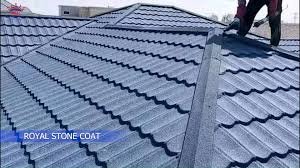
Stone-coated mabati are steel sheets that are coated with stone chips and acrylic resin. Their finish is textured and they resemble clay tiles. Their cost is definitely on the premium side as prices range from Ksh 1,200 – 2,000 per meter. They are used on luxury homes and high-end developments owing to how strong and aesthetic they look.
Advantages
Disadvantages
Extremely durable with a long lifespan
Expensive compared to other mabati types
Weather-resistant and suitable for all climates
Heavier, requiring a strong roof structure
Noise-reducing and offers a premium, elegant look
You can’t harvest drinking water from this type of roof
Mabati price comparison table
Type of Mabati
Approx. Price (per meter)
Durability
Common Uses
Corrugated Mabati
KSh 350 – 600
Fair – lasts 10–15 years (if coated)
Rural homes, sheds, schools, and temporary structures
Box Profile Mabati
KSh 600 – 1,000
Good – 15–25 years
Residential homes, commercial and industrial buildings
Versatile Mabati
KSh 900 – 1,200
Very Good – 20–30 years
Modern homes, estate developments, and offices
Orientile Mabati
KSh 950 – 1,300
Excellent – 25–35 years
High-end homes, churches, and institutional buildings
Dumuzas Mabati
KSh 700 – 1,000
Excellent – 30+ years
Coastal and humid areas, warehouses, and industrial sites
Stone-Coated Mabati
KSh 1,200 – 2,000
Superior – 40+ years
Luxury homes, villas, resorts, and noise-sensitive buildings
cost of roofing 3-bedroom house
While you will definitely need to involve a professional for costing your roof, this simple breakdown will help you calculate the cost of Mabati. Roofing costs are far more detailed than what I have provided below as they include; labor & cost of timber for frames. This breakdown only calculates the amount and cost of sheets.
For our example, let’s assume we are using corrugated sheets to roof a space with a length = 12 m and a width = 10 m.
Procedure
1. Find the roof’s length and width which we have already found to be 12 m x 10 m.
2. Include Overhangs – Add eaves (sides) and verges (ends) to your measurements. Normally, roofs extend past the exterior walls of a building and those areas that do so are either eaves or verges.
There are several popular brands of Mabati in Kenya with outlets countrywide. However, before buying always make sure you are sourcing directly from the manufacturing company. Also do a little bit of research online for things like ratings or complaints about the brand. The list below is not a recommendation but a showcasing of options available for you to choose.
Mabati Rolling Mills is Kenya’s leading roofing manufacturer, known for premium-quality sheets such as Dumuzas, Resincot, and Versatile. Their products are long-lasting, corrosion-resistant, and ideal for both urban and coastal environments.
Location: MRM Complex, Old Mombasa Road, Athi River
Royal Mabati offers affordable and stylish roofing sheets, including box profile, corrugated, and tile designs. They are known for competitive prices and a variety of colors and gauges suited for different budgets.
Location: Along Mombasa Road, Nairobi (main factory)
Zinco Mabati focuses on cost-effective roofing solutions available in multiple gauges and finishes. They are popular for offering durable roofing options at fair prices, ideal for residential and small commercial projects.
Kenya One Mabati is known for its modern tile and corrugated profiles that combine durability and aesthetic appeal. They provide customized sheet lengths and color options for homeowners and contractors.
Location: Red Heron Building, 2nd Floor, Kitengela
Roofing Mabati Kenya supplies corrugated, box profile, and V-tile sheets with fast delivery and on-site stock availability. Their products are reliable for both residential and light commercial construction.
A 3-meter Mabati sheet in Kenya typically costs between Ksh 600 and Ksh 1,500, depending on the brand and gauge
2. How many iron sheets for a 2-bedroom house?
This depends with the choice of roof style, size of sheets as well as size of the house. Typically, a 2-bedroom house usually requires about 80 to 100 iron sheets.
3. How many iron sheets for a 3-bedroom house in Kenya?
A 3-bedroom house often needs around 100 to 140 iron sheets, depending on roof slope and coverage area.
4. What is the difference between Mabati gauge 30 and 32?
Gauge 30 Mabati is thicker and more durable than gauge 32, which is slightly lighter and cheaper.
5. How much is Mabati per meter?
Mabati sheets in Kenya cost around Ksh 350 – Ksh 2000 per meter, depending on profile, brand, and thickness.