
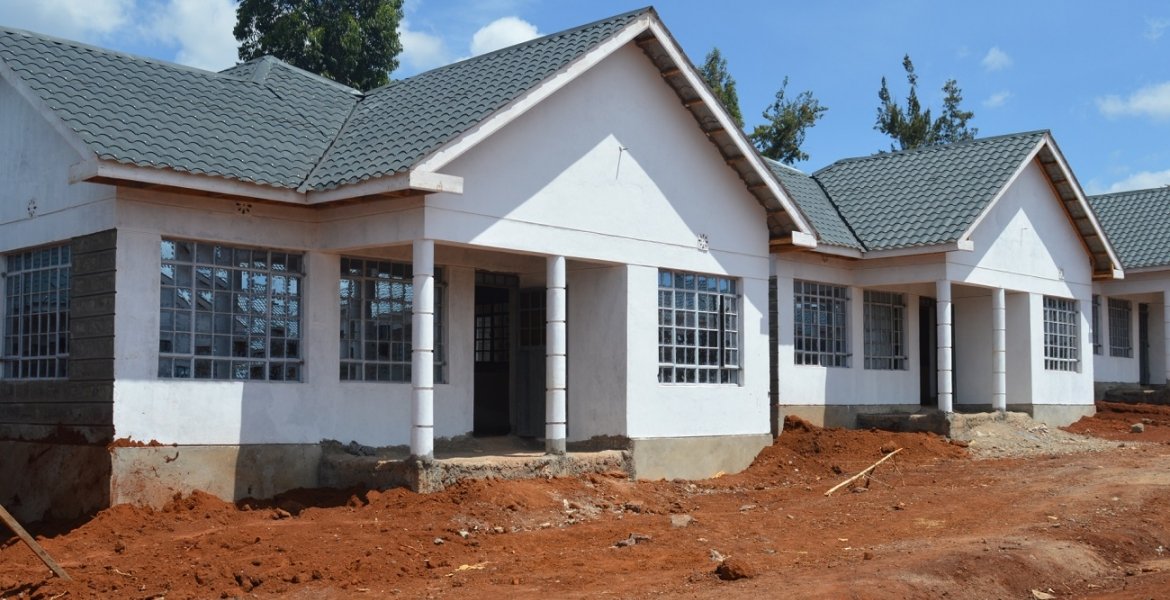
Banda Homes has been in the headlines since 2019, and all for bad reasons. If you are not familiar with the company, Banda Homes is a real estate developer famous for the off-plan model of housing. Buying a house off-plan means that you are buying into the concept of the development before any units are complete.
Many Kenyans love this model because it offers them the flexibility to sort out the payments in tranches, which is cheaper. It also gives you control over specific areas of the project, such as your finishes. Banda Homes knew of the appeal that off-plan homes had to Kenyans and exploited this. In this case study, we are going to be discussing the controversy and red flags, as well as lessons we can learn to avoid such a case from affecting any of us.
Banda Homes' Ambition
The story of Banda Homes began like any other ‘revolutionary’ company. A hyped marketing campaign, tons of interviews from local and mainstream media, and success stories from previous investors. All this is done to woo the public and let them know about the ‘new’ company in town delivering on promises.
What was quite evident from their marketing was the affordable nature of their units. Putting up a residential home is quite expensive. You have to buy land and begin managing the construction of your house, which can be a pain in the neck. That is why when people heard of the ‘cheap’ price Banda was selling for, they rushed in their hundreds to secure a piece of the pie.
For context Banda had several projects in key satellite towns outside Nairobi that were quite affordable.
| Unit Type | Number of Bedrooms | Price (KES) |
| Bungalow (Standard / Pinewood Style) | 3 | 4.0M – 5.35M |
| Bungalow (Resale / Partially Completed) | 3 | 5.5M |
| Maisonette | 2–3 | 6.99M – 7.99M |
| Apartment (Off-plan) | 2–3 | 5.35M |
At the peak of their fame, Banda Homes boldly laid out their ambitious plan to deliver 1500 units. Ranging from 2- & 3-bedroom units that were within the reach of many middle-class families. Numerous success stories were aired, and with the handing over of about 77 units, many Kenyans were now convinced of their legitimacy.
Where Drama Began
The marketing pulled by Banda definitely worked magic, as they sold out on most of their projects before 2019. This meant that buyers had signed offer letters on all units and had paid a deposit. The ball was now in Banda’s court to deliver.
It was not until a team of investors visited their projects in 2019 that they began questioning the promises made to them. You see, for such developments of this magnitude, you need to have a big workforce for the delivery to go as planned. However, most of their projects had very few workers, with some of the units appearing abandoned.
The investors, on seeing this, began to demand progress that matched the amount of contribution they had paid. One investor claimed to have paid 3 million shillings, but his house was still not yet started. Another one claimed to have completed making their payments, but only a shell stood in place of their home without any finishes.
Many more investors came out claiming foul play, and a sizeable number stopped making payments. The management at Banda Homes tried to ignore the issue, but the angry investors soon found their way to voice their frustrations on mainstream media channels. One by one complaints started to come in, and it was seemingly starting to look like a scam.
The Pandemic struck
Perhaps in the untimeliest manner, the pandemic struck, and the nation entered into a lockdown like the rest of the world. With this came a chance for the developer to point blame at the pandemic, which he cited had affected their progress. However, when the issue is put into focus, only the contracts signed during the pandemic can qualify for this excuse. Investors rubbished the claims as foul play, and many of them began filing lawsuits aiming to either have the developer finish the work or refund their millions.
To date, it is estimated that the hundreds of developers lost about 3 billion shillings cumulatively in what has unfolded to be nothing short of a scam.
Present day
Earlier this year, in August 2025, Banda Homes declared bankruptcy and was put under receivership. This means that the company has been unable to meet its debt obligations and has been assigned to a receiver. The receiver will facilitate the sale of Banda Homes assets with an attempt to recover the lost money. However, only a fraction of this cash can be recovered, seeing that many of their projects lie in total waste.
lessons for Us
Such cases, while unfortunate, leave us with lessons that we can learn to avoid being future victims of such scams.
i. Constant Name Changes
Unknown to many of the investors, this was not the first time the directors of Banda Homes had scammed people. Earlier on in 2011, the company had rebranded twice after a similar incident. They had changed from Dinara developers to Lettas developers, having shortchanged other investors in projects around Umoja and Juja Witeithie.
For future purposes, always check who the directors of the project are and some of their past work and cases. Had the majority of investors carried out due diligence, they would have proceeded with caution and saved their money.
iI. Reading Contracts Thoroughly
To rephrase it better, always employ the expertise of a legal professional before signing any contract. From your letter of offer to the sale agreement, look out for clauses that favor the developer at your expense. In Banda’s case, there was a specific clause that read, “The developer shall not be liable in any case if delay occurs.” Such a clause puts you as an investor at the mercy of the developer. My advice is if you notice a lack of transparency in the clauses with heavy legal jargon that appears vague, always do more due diligence on the developer. Remember, what is in the contract is legally enforceable, including any loopholes.
III. Lack of Transparency
Transparency was lacking in so many areas of the Banda homes sales pitch that I find it quite disheartening that investors could not see this. My advice to you is that you should treat such business arrangements like your relationships. If you notice a lack of transparency from your partner in your dating, would you proceed to marry them?
You need to seek transparency about
The funding model of the development—is the project purely being driven by only off-plan income? If the developer has sought financing, what percentage of the development has been committed to the loan?
What are the project timelines? You need to ask the developer when he intends to complete the project and what will happen in the case of delays.
What happens if the price of materials changes? – In Kenya, our construction industry relies heavily on imports, which are subject to price volatility. Who will be liable if the price of materials like cement and steel changes? True to this, the price of the materials rose significantly after.
What are the agreed finishes? – In construction, we have a document called the schedule of finishes. This is a list of the finishes that will be used in a building and are typically included as part of architectural drawings. What happens when the developer uses tiles instead of granite finishes as agreed earlier?
How much is the service charge? – Assuming the project was completed and handed over, how much would the service charge be? And how would the management arrive at this number?
What affected investors can do
For the Banda Homes investors, saying sorry is not enough. Many of them sunk their hard-earned money, pensions, and even loans into a very promising project. It is sad to see them lose their investment. There are two ways to approach such a rogue developer:
I. seek a specific performance claim
If you are sure the developer has enough financial muscle to complete the project, you can move to court to contest the enforcement of the contract. This means that the developer will be obligated to keep the end of his bargain and finish the unit. Such a claim works effectively where the developer delivered a substandard unit contrary to what was in the contract.
II. File a breach of contract
If you notice that the developer can’t finish up your unit, filing a breach of contract is the best way to recover your money. The law mandates the developer to return all the money to the investor. The issue with waiting for the company to be placed under receivership is that you lose a huge amount of it in what the law terms as a haircut. The earlier you file for a breach of contract, the better for you.