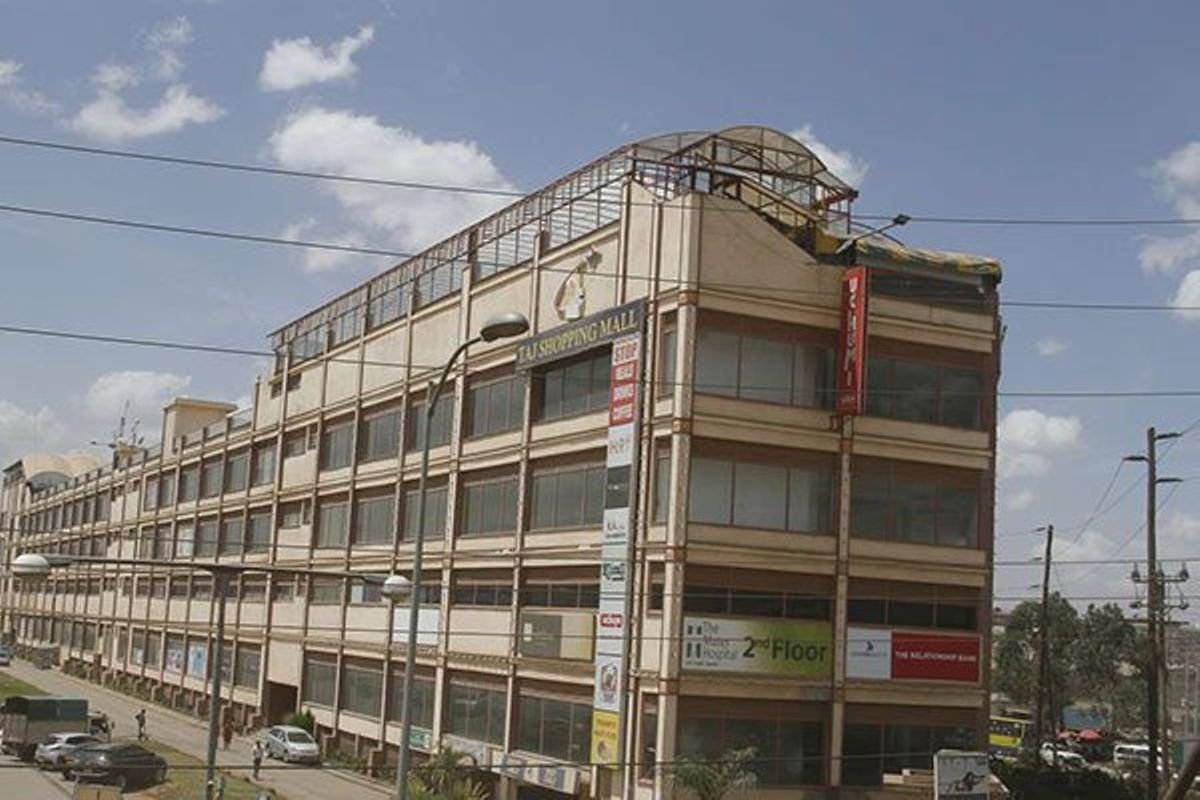
Taj Mall has been quite a contentious topic in the recent past following its demolition. Prior to its demolition, the mall was renamed AirGate Center. Which was the beacon of modern commercial centers in the late 2000s.
The mall was owned by Rameshchandria Govin Gorasia, who is an Indian businessman in Kenya. It sat on a 4-acre parcel of land adjacent to the Outer-Ring road and is said to have cost about 5 billion shillings. Taj Mall was completed in 2011 but did not really see the potential it was eyed for, as it was soon demolished in 2018 after a series of court battles and notices.
In this case study we will be breaking down what really happened to Taj Mall, the mistakes done, as well as what we can learn from a real estate point of view.
How Taj Mall Started
The concept for Taj Mall was one that was aimed at changing the face of the Outer Ring area drastically. The owner, whom I laud as being quite the visionary, had seen the potential of commercial retail far ahead.
Rameshchandria acquired 1.75 acres in the first phase of the mall’s land acquisition in 1991. Later in 1995, he moved on to acquire another 2 acres that brought the total land size to 3.75 acres. With a sizeable chunk of land and a vision for modern retail, he got his construction approvals in 1995.
All things looked clear throughout its construction period leading up to 2011, when it was finished and opened. If you are familiar with the early 2010s, one thing that was clear is that malls were quite the new trend. At a time when Kenya’s economy had stabilized after a rough political period and infrastructure development was bringing investors to the country, Taj Mall was just in time to reap big.
Issues Begin in Taj Mall
The project’s success was short-lived, as just after completion in 2011, he began experiencing legal issues. From lawsuits to objections, Rameshchandria was experiencing it all. However, he fought vehemently to keep his property standing amidst multiple ongoing court battles.
In 2013, the National Land Commission (NLC) revoked the title for the property where Taj Mall stood. The owner disputed these claims, stating that all approvals were valid and that he legally acquired all the parcels that he amalgamated. This strategy simply means buying land in fractions and combining the small lots to form a bigger chunk.
Rameshchandria was so committed to safeguarding his property that he ran for the Nairobi Senatorial seat in 2013 on a Wiper party ticket. He unfortunately lost to Johnstone Sakaja at the time.
In 2016, the issue began seeing some hope as the National Land Commission (NLC) issued a letter stating the building would not be demolished. It seemed as though hope was on the way, and the Kenya Urban Roads Authority (KURA) was tasked to redesign the road to spare the mall.
Taj mall before demolition
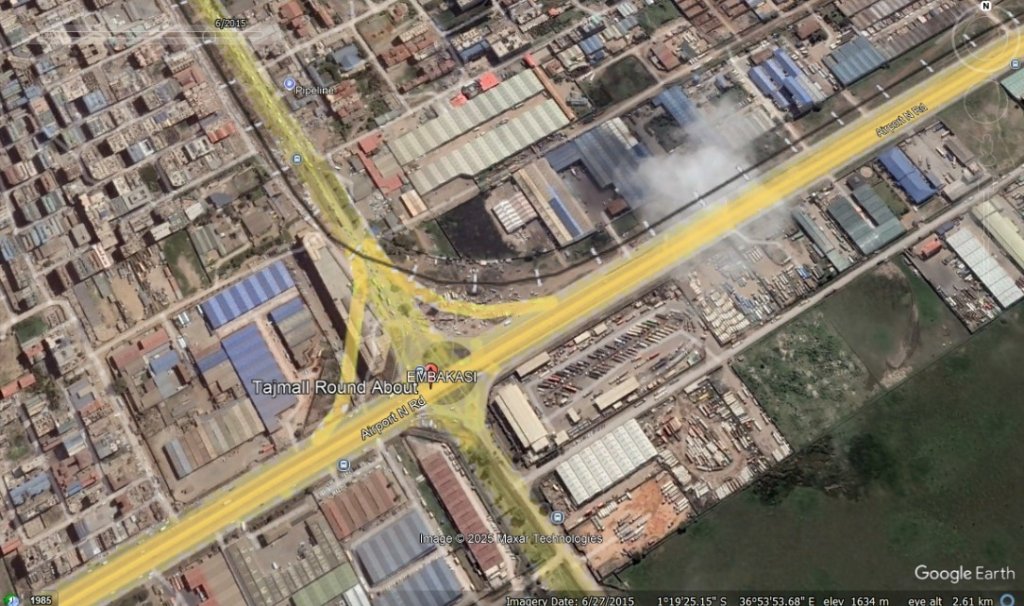
This is an aerial picture of Taj Mall in 2015 before its demolition. As you can see, it sits in the middle of the current Outering road. This proves that indeed, Taj Mall was built on road reserve.
Taj mall after demolition
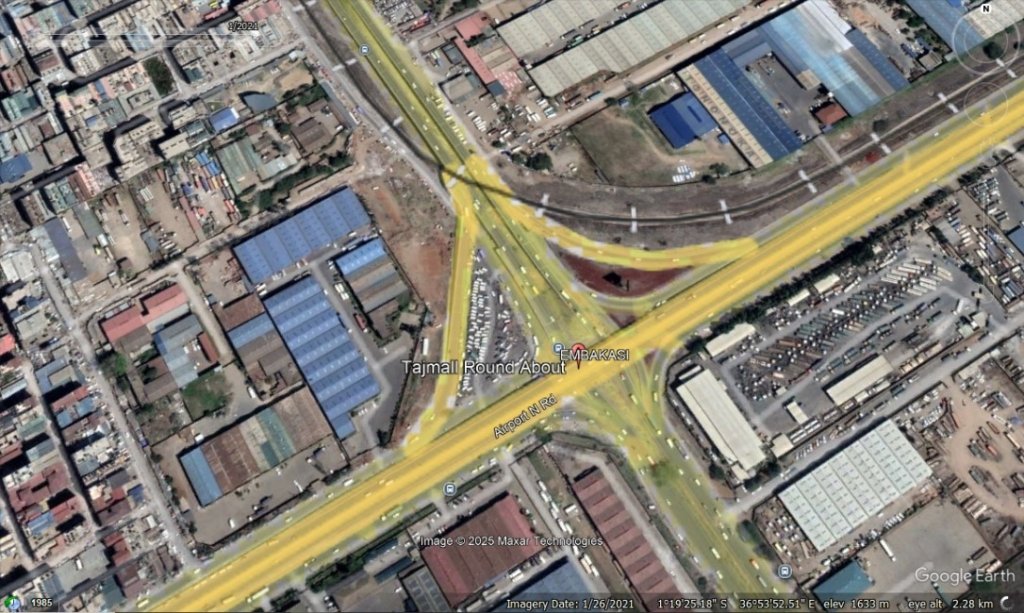
This is a picture of the Taj Mall area after demolition in 2018 and as you can tell, the road was indeed expanded to occupy the demolished area.
The Final Straw
In 2018, just as the mall was beginning to spur new life. A multi-agency team on unsafe structures announced about 4,000 buildings across Kenya were set to be demolished. Unfortunately, as fate would have it, Taj Mall was among the listed structures.
Around August of 2018, both KURA and NLC issued a 14-day demolition notice, giving the developer 14 days to pull down the building voluntarily. At this time the building was quite vacant, and from the owner, he had lost 2-3 billion shillings in missed rents, as the legal tussles had scared away tenants. In commercial properties, tenants often sign long leases, and losing just one tenant could set you back years to recover.
It was clear that Taj Mall was living on borrowed time, and on September 15th, 2018, the mall was brought down. This brought an end to these legal battles, and after that the owner did not seek any legal recourse.
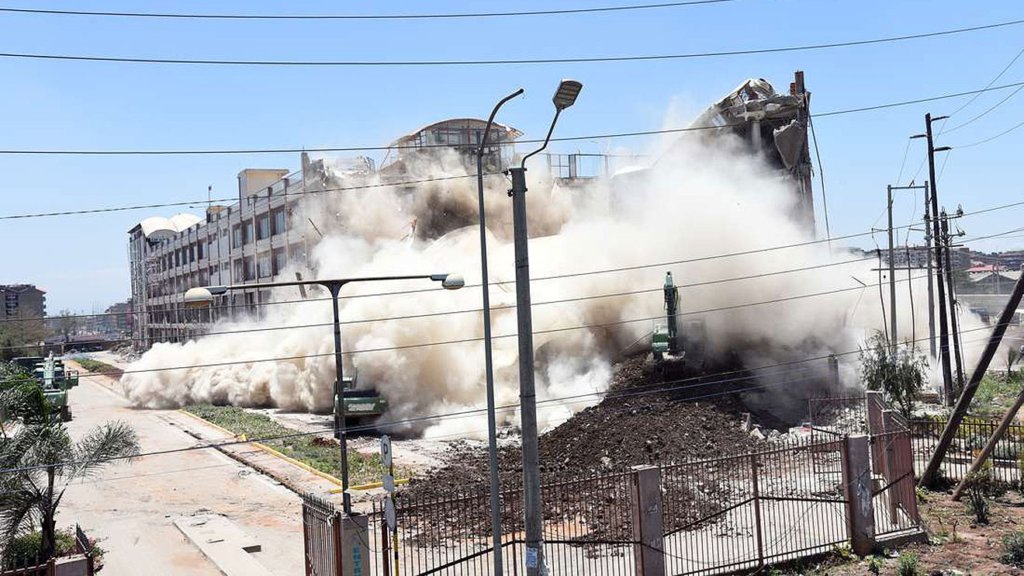
taj mall's Red Flags
After the dust settled, one question that still troubles many is, could things have been done differently? And what can we learn from all this ordeal?
1. Ignored Land due diligence
Long before Rameshchandria acquired the land, the colonial government had already obtained it for the expansion of the Outer Ring Road. This was done in 1964, and as time would have it, it would later haunt the owner in the future.
Given the significant investment Mr. Rameshchandria was making, conducting due diligence on all fronts should have been a logical decision. From legal due diligence to the wayleave and lot size, the owner should not have put his full faith in government agencies.
His blind trust in the Commission of Lands saw him sign a 99-year lease that was granted by the then commissioner, Mr. Noah Sang.
2. land amalgamation
As I had earlier explained, such projects require huge tracts of land. Given the scarcity of land in Nairobi and the dispersed ownership, the owner chose to acquire the land in stages. To the untrained eye, the arrangement might seem like simple math of bringing together independently owned properties.
However, a question you must ask is how did he convince the independent owners to sell to him? Amalgamation of land often comes with many risks. And if you are injecting serious capital into such a project, you are better off seeking a clean, independently owned piece of land.
3. Political interference
Politics in Kenya is what I like to term as a necessary evil. In the lifetime of Taj Mall, the project was put together through 3 political regimes. The Moi era, Kibaki’s era, and Uhuru’s regime. One thing the Moi era was known for was land injustices. His government was known for awarding his supporters with public land. And seeing that the owner received the lease from the commissioner in Moi’s government paints one of the red flags.
Kibaki’s regime had a bit of sobriety but failed in streamlining land injustices. We can see how he investigated and put together the Ndungu report. The document showcased all injustices related to land, but no action was taken. That is why, in my view, Kibaki’s regime might have tolerated the construction and completion of Taj Mall in 2011.
If you are keen, you will notice a trend. In 2013, after the new government came in, the National Lands Commission (NLC) revoked the title for Taj Mall. Moreover, the owner was focused on clinching the Nairobi Senatorial seat in a bid to protect his property. All this points to a lot of politics, which could have led to the demolition.
Lessons for Real estate investors
1. Due Diligence Everything
Most investors who have failed can trace back to some inconsistencies or red flags they missed. Just because they did not carry out due diligence. From the land parcel owners to the actual dimensions of the land. Make sure you verify everything using the right professionals. Also, make sure that you have taken the personal initiative to verify ownership from the NLC to the Ministry of Lands.
2. Never commit capital on contested property
In a country where political connections and money might seem to place people above the law, I still believe in following it. Political protection fades when a different regime moves into power. And if you had enjoyed protection from a former regime, it is not granted that the incoming government will do the same. Building a business on top of political protection while breaking the law is not a sustainable way of investing.
3. Government infrastructure takes priority
When investing in areas with key infrastructure such as roads, pipelines, or airports, it is important that you understand factors like the wayleave and restrictions involved. Government infrastructure will always take priority. This is called the power of eminent domain, and any investment near such critical areas must be guided by professionals.
Frequently asked questions
1. Why was Taj Mall demolished?
Taj Mall was demolished because it sat at the roadway which was earmarked for the expansion of Outering Road.
Taj Mall is owned by Indian Billionaire and businessman Rameshchandria Govin Gorasia.
Taj Mall was demolished in September 15, 2018.