
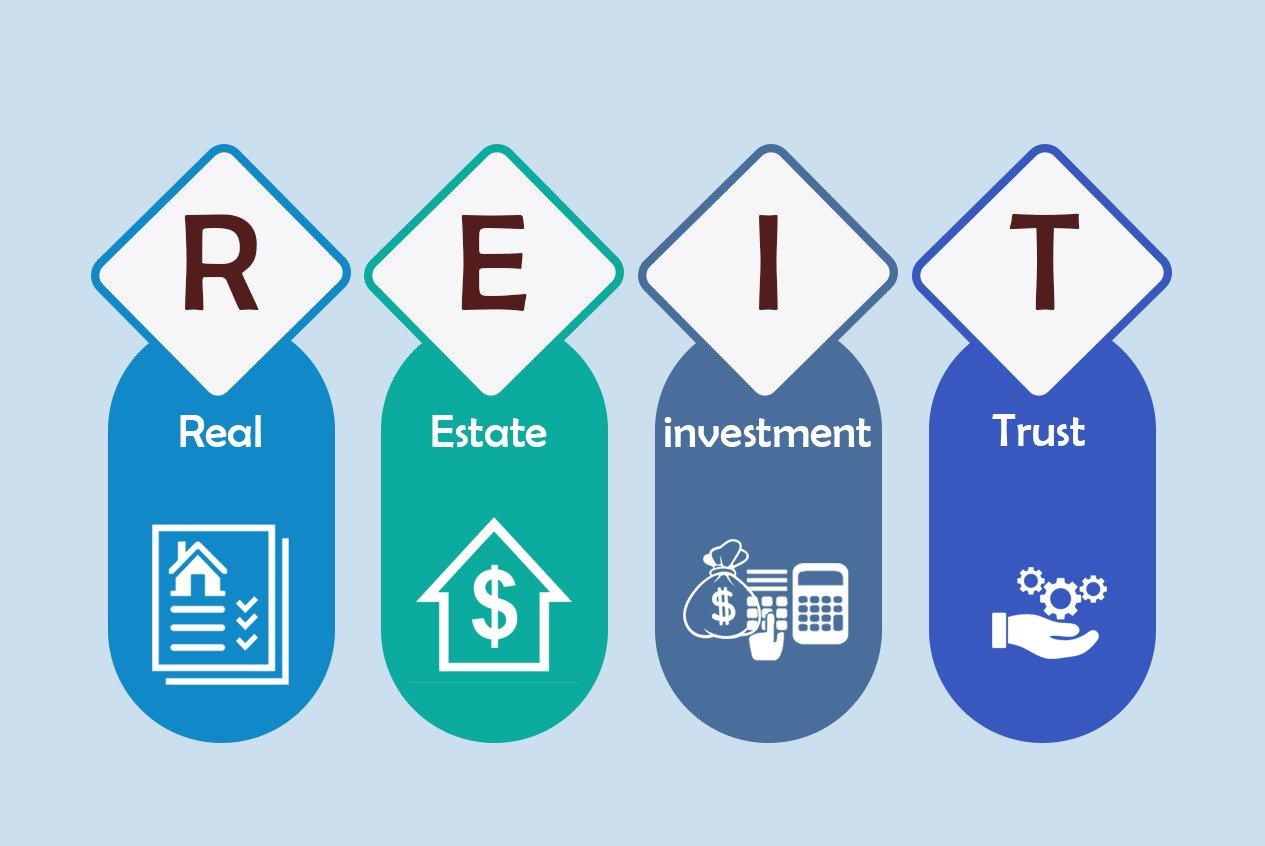
REITs are regulated investment vehicles that allows people to collectively invest in Real Estate. By regulated, I mean that their activities and functions are controlled by the Capital Markets Authority (CMA). This is done to protect investors or Beneficiaries. The relationship between the trustee (which is normally a bank or financial institution) and beneficiaries (who are the investors) is called a fiduciary relationship. This means the Trustee is required to act in the best interest of the investors.
Why do REITs exist?
It is no doubt that Kenya has been experiencing a Real Estate boom. And with the positive demographics we have. Like a growing population & a high urbanization rate, it is not stopping anytime soon. However, the costs of construction can be really high. Without creative financing options, developers are unable to finance ambitious projects. REITs , offer an opportunity for investors to invest in real estate projects. Meaning people can enter in at very low costs while providing developers the much needed capital.
Examples of REITs in Kenya
REITs invest in different real estate classes. So you might want to check this before investing. The various classes include commercial, residential, student accommodation and retail. And the reason as to why I say this is because the returns on the different classes may be different.
REITs that invest in commercial or retail real estate might earn better. This is due to the stable and long term tenants they get. However, market conditions such as a sluggish economy or commercial space oversupply can eat into your profits.
| REIT Name | Type (I-REIT / D-REIT) | Trustee |
| ILAM Fahari I-REIT | Income REIT | The Co-operative Bank of Kenya Limited |
| Laptrust Imara I-REIT | Income REIT | Co-operative Bank of Kenya Limited |
| Acorn Student Accommodation I-REIT (ASA I-REIT) | Income REIT | Co-operative Bank of Kenya Plc |
| Acorn Student Accommodation D-REIT (ASA D-REIT) | Development REIT | Co-operative Bank of Kenya Plc |
There are 3 major Types of REITs in Kenya:
a. Income REITs (I-REITs)
An income REIT allows you as an investor to participate in the purchase of income producing real estate. Through collective investment, you can buy a property with stabilized income. And afterwards earn income from it through rents and capital appreciation. The returns are distributed at the agreed period.
b. Development REITs (D-REIT)
This is a type of REIT that is used in the construction and putting up of properties. Either for sale, renting, lease or with the aim of converting them to I-REITs. As an investor you can choose to sell, lease or convert your D-REIT to an I-REIT.
c. Islamic REITs
Islamic REITs are used to invest in properties that are considered sharia compliant. A compliant property should follow Sharia laws. The main aim being to ensure that non-permissible actions don’t happen in the property. The REIT manager is tasked with this duty of checking if a property is compliant before investing in it.
How REITs work
Pooling of Money
- Many investors (big and small) put their money together.
- This pool of money is managed like a “basket” for real estate investment.
Buying/Building Property
- The REIT uses the pooled money to buy income-generating real estate. This includes properties like malls, offices, apartments, hotels, student hostels.
- In the case of a D-REIT, it is used to develop/build new property projects.
Trustee Oversight
- A trustee (usually a bank) holds the property and ensures the REIT manager is doing everything according to the rules.
- This protects investors from misuse of funds.
Professional Management
- A licensed REIT Manager handles day-to-day operations. Such operations include leasing property, collecting rent, paying expenses, and distributing profits.
Income Distribution
- The rental income or sale profits are shared out as dividends to investors. This is after costs like maintenance and management fees.
- By law, REITs must distribute at least 80% of their profits to investors.
Trading of Units
- Investors don’t own the buildings directly, but instead own units (like shares) in the REIT.
- These units can be bought or sold on the stock exchange (if the REIT is listed).
advantages of investing in REITs
- The provide investors an opportunity to invest in real estate without heavy capital. Or the stress of managing and running the property.
- It is a capital source for developers especially when banks are offering high interest rates.
- It allows you as an investor to diversify your portfolio. This reduces your overall risk and by the fact that you are investing in a stabilized real estate asset. Your risk is further lowered.
- They promote real tangible growth in an economy. All parts of the economy are in a way linked to real estate. Investing in a REIT lets you invest into something whose impact you can see unlike MMFs.
- REITs provide liquidity in case you need to exit the investment. By the fact that they are traded like stocks, you can easily liquidate your position for cash by selling to another investor. This removes the ‘illiquid’ nature of real estate.
- Investing in REITs is tax efficient compared to directly doing a development yourself. This is because REITs are exempted from VAT and Stamp duty tax. Moreover, unlike corporations which experience double-taxation. That is tax on the profits they make and when they distribute the remainder to investors in form of dividend, the investor is taxed again. REITs are only taxed once and that is in form of withholding tax.
- Their regulated nature protects your investment unlike private offers. This means that the CMA is acting as an oversight and your money is in safe hands.
Disadvantages of investing in REITs
- REIT incomes can decrease if rents or the value of the building goes down. This can happen when the markets reverse owing to factors like oversupply or high taxation.
- Without a good manager, REITs could actually lose money. Good property managers are thus required to act in the best interest of the investors.
- Some REITs have a high initial investment requirement. This often keeps out retail investors like you and me from profiting from them.
- Competition from high yielding investment alternatives like Treasury bonds or stocks. Which might pull a huge share of investors.
Frequently asked questions
1. How do I invest in REITs in Kenya?
You can invest in REITs in Kenya by purchasing units through the Nairobi Securities Exchange (NSE) via a licensed stockbroker.
REITs can be a good investment in Kenya, offering the potential for regular income and capital appreciation through diversified property portfolios.
The minimum amount to invest in a REIT in Kenya typically depends on the specific REIT, but it is usually accessible with a few thousand Kenyan Shillings.
Most REITs in Kenya pay dividends quarterly or annually, though some may offer monthly payouts depending on their distribution schedule.
Beginners can invest in REITs by opening a trading account with a licensed stockbroker or through an investment platform that offers REITs.
The wealthy in Kenya typically invest in real estate, stocks, government bonds, and high-yield assets like private equity or venture capital.
You can invest in rental property, dividend-paying stocks, or specific REITs that provide monthly payouts for consistent income.
While there’s no guaranteed way to get rich quickly, successful entrepreneurs often invest in real estate, high-growth businesses, or stocks that offer high returns.
The best investment in Kenya currently might include real estate, government bonds, or REITs, depending on your risk tolerance and investment goals.